Category Archive

Charging

Why Charging Slows Down Near 100% The Science Behind Battery Charging Curves
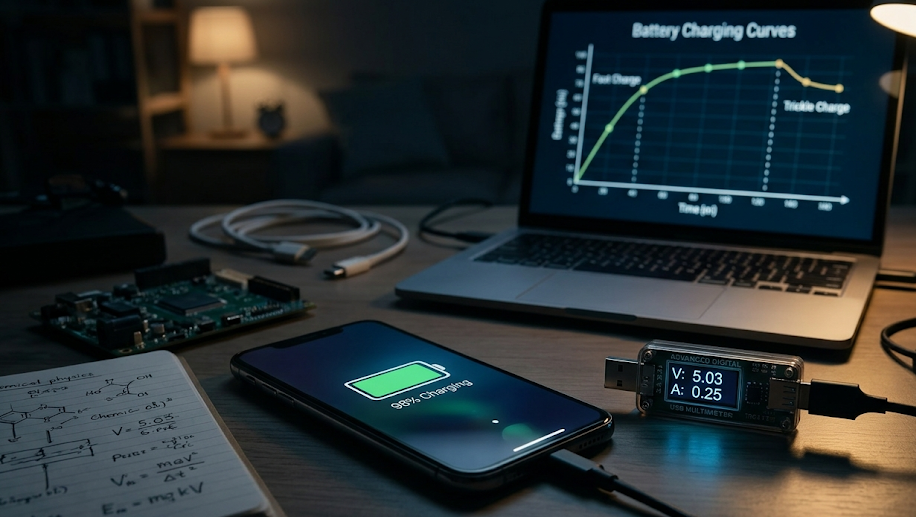
BATTERY SCIENCE LAB / EVERYDAY TECHNOLOGY Why the Final Percentage Takes Longer Explore the chemistry, electrical controls, and charging strategies that make batteries charge quickly at first and more slowly as they approach full capacity. LITHIUM-ION CHARGING CURVES BATTERY HEALTH Imagine plugging in your smartphone when its battery is almost empty. During the first part … Read more
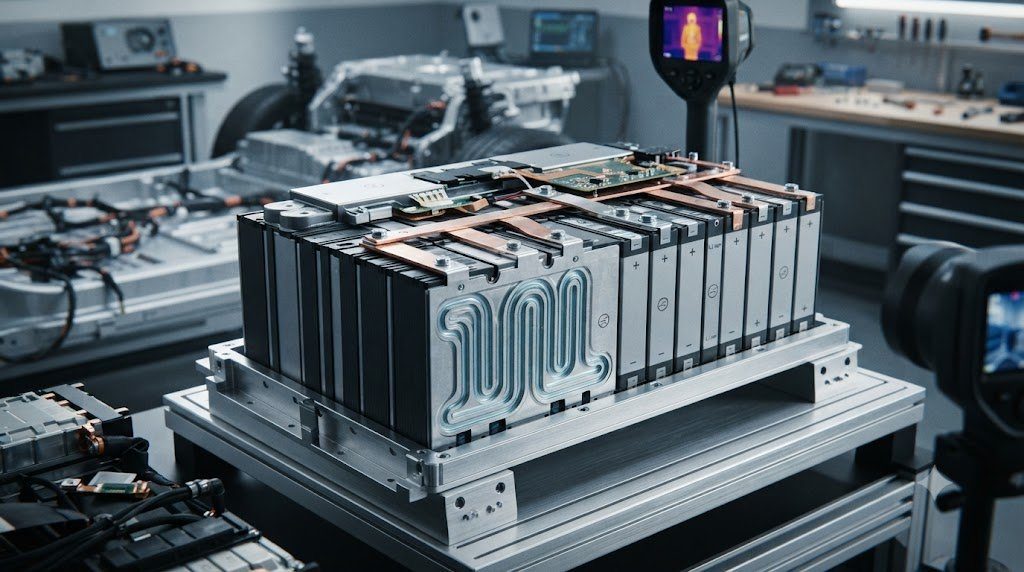
Battery Thermal Management Systems (BTMS): Liquid Cold Plates, Phase Change, and Immersion

Rechargeable lithium-ion batteries are profoundly sensitive electrochemical systems operating within a strictly unforgiving thermal window. For optimal performance, energy efficiency, and longevity, cell operating temperatures must be maintained between 20°C and 35°C, with temperature variations across the entire multi-thousand-cell pack restricted to less than ±2°C to 3°C. Operating below 0°C triggers metallic lithium plating, while … Read more

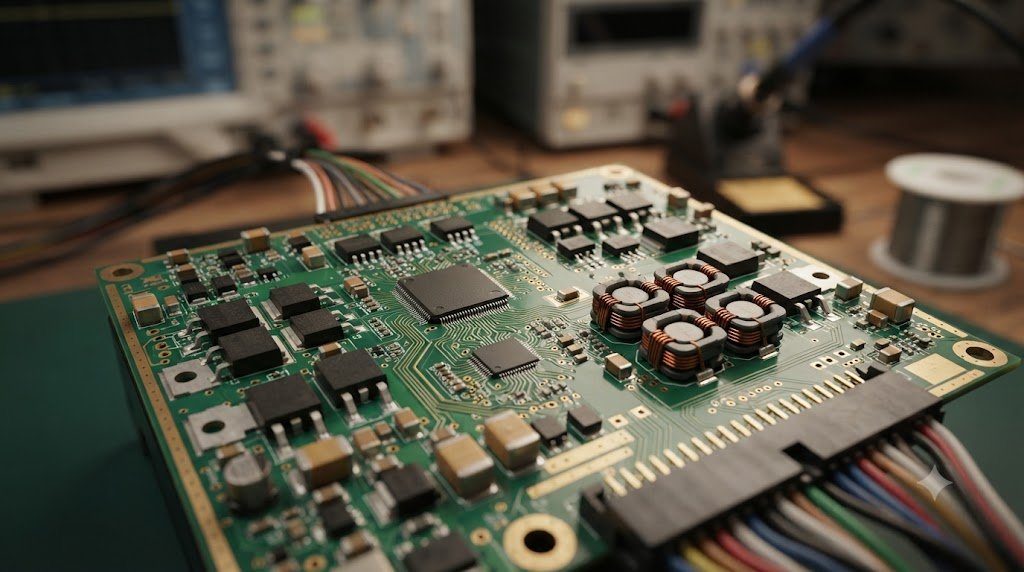
Cell Balancing Architectures: Passive Shunting vs. Active Energy Redistribution

In any multi-cell lithium battery pack—whether powering an electric vehicle with 96 cells in series or a multi-megawatt grid energy storage container with thousands of interconnected cells—the entire pack is fundamentally constrained by its weakest single cell. Manufacturing variations in capacity, internal resistance, and self-discharge rates cause series-connected cells to diverge in voltage and State … Read more

Extreme Fast Charging (XFC): Thermal Transport, Overpotential, and Plating Boundaries

The widespread consumer adoption of electric vehicles hinges on achieving fueling parity with traditional internal combustion engine automobiles—specifically, replenishing 200 miles of highway driving range in under 10 to 15 minutes. This technological benchmark is officially designated by the U.S. Department of Energy as Extreme Fast Charging (XFC), requiring charging rates between 4C and 6C … Read more

CC/CV Charging Protocols: Saturation Thresholds, Taper Currents, and Cut-off Kinetics

Charging a rechargeable lithium-ion battery is an intricate balance between electrochemical thermodynamics, mass transport kinetics, and solid-state diffusion limits. The universally adopted foundation of lithium battery charging is the Constant Current / Constant Voltage (CC/CV) protocol. Managing the transition between these two distinct electrochemical regimes, calibrating end-of-charge saturation current cut-offs (C/20 to C/50), preventing parasitic … Read more