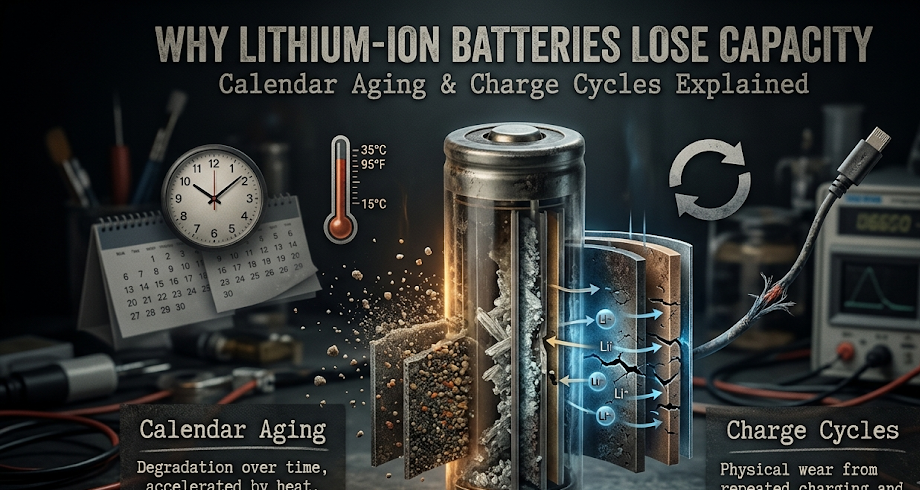
Ternary layered oxide chemistries—specifically Lithium Nickel Manganese Cobalt Oxide (NMC) and Lithium Nickel Cobalt Aluminum Oxide (NCA)—stand as the high-energy-density engines powering the modern electric vehicle revolution and long-range mobility. First conceptualized through the seminal discoveries of John Goodenough, Tsutomu Ohzuku, and Michael Thackeray, ternary layered cathodes achieve extraordinary specific capacities exceeding 200 to 220 mAh/g and cell voltages up to 4.2V to 4.35V. From early balanced NMC 111 configurations to state-of-the-art nickel-rich NMC 811 and single-crystal morphologies, understanding the interplay between elemental doping, cation mixing, phase transitions, and thermal runaway kinetics is vital for electrochemical systems engineering.
The High-Nickel Energy Dilemma
Increasing nickel content boosts capacity and driving range because nickel ($Ni^{{2+}}/Ni^{{3+}}/Ni^{{4+}}$) is the primary multivalent redox active element. However, higher nickel ratios drastically compromise thermal stability and cycle life by lowering the oxygen release onset temperature and promoting destructive cation mixing ($Li^+ / Ni^{{2+}}$).
1. Crystallography: The Layered Rock-Salt α-NaFeO2 Structure
Both NMC ($LiNi_{1-x-y}Mn_xCo_yO_2$) and NCA ($LiNi_{1-x-y}Co_xAl_yO_2$) crystallize in the layered rock-salt crystal structure belonging to the rhombohedral R3̅m space group (the α-NaFeO₂ structure type):
- Alternating Atomic Planes: The structure consists of cubic close-packed oxygen layers with transition metal cations ($Ni, Mn, Co, Al$) and monovalent lithium cations ($Li^+$) occupying octahedral interstitial sites in alternating, parallel two-dimensional planes.
- Two-Dimensional Lithium Intercalation Pathways: Unlike LFP’s narrow 1D tunnels, lithium ions in layered oxides diffuse rapidly in continuous 2D planar sheets sandwiched between $MO_6$ transition metal slabs. This 2D mobility delivers superior rate capability and high power output under rapid acceleration.
2. Elemental Synergies: The Individual Roles of Nickel, Manganese, Cobalt, and Aluminum
The performance and stability of ternary cathodes are dictated by the delicate stoichiometric balance of each constituent element:
- Nickel ($Ni$) — The Capacity Engine: Nickel provides the high specific capacity. During charging, nickel oxidizes from $Ni^{2+} o Ni^{3+} o Ni^{4+}$, delivering two electron equivalents per nickel atom across the operational voltage window (3.0V to 4.3V). Increasing nickel content directly increases battery capacity (Ah) and driving range.
- Cobalt ($Co$) — The Kinetic Conductor: Cobalt stabilizes the layered lattice framework and suppresses structural disorder. It provides exceptional electrical conductivity and lowers the activation barrier for lithium diffusion, enabling rapid charging and high discharge rates. However, cobalt is toxic, astronomically expensive, and geopolitically concentrated.
- Manganese ($Mn$) — The Structural Guardian: Manganese remains electrochemically inactive in its $+4$ oxidation state ($Mn^{4+}$) across the standard operating window. It acts as an electrochemically inert structural pillar that improves structural stability, elevates the thermal decomposition temperature, and drastically lowers raw material costs.
- Aluminum ($Al$) — The NCA Stabilizer: In NCA chemistries (promoted by Tesla and Panasonic), manganese is replaced with electrochemically inactive aluminum ($Al^{3+}$). Aluminum forms exceptionally strong $Al-O$ ionic bonds, strengthening the crystal lattice against mechanical micro-cracking and suppressing oxygen release during overcharge.
3. The Evolution of Stoichiometric Ratios: From NMC 111 to NMC 811
Over the past two decades, battery manufacturers have systematically evolved ternary stoichiometry to maximize nickel content while minimizing expensive cobalt:
| NMC Stoichiometry | Elemental Ratio (Ni : Mn : Co) | Specific Capacity (mAh/g) | Cell Energy Density (Wh/kg) | Thermal Runaway Temp (°C) | Key Evolutionary Era |
|---|---|---|---|---|---|
| NMC 111 (333) | 33.3% Ni : 33.3% Mn : 33.3% Co | 155 – 160 mAh/g | 180 – 200 Wh/kg | ~220°C (High safety) | 2008 – 2014 (Early EVs, BMW i3) |
| NMC 532 | 50% Ni : 30% Mn : 20% Co | 165 – 175 mAh/g | 210 – 230 Wh/kg | ~205°C | 2015 – 2018 (Workhorse automotive) |
| NMC 622 | 60% Ni : 20% Mn : 20% Co | 175 – 185 mAh/g | 230 – 250 Wh/kg | ~195°C | 2017 – 2020 (Mainstream EVs) |
| NMC 811 | 80% Ni : 10% Mn : 10% Co | 200 – 215 mAh/g | 260 – 300 Wh/kg | ~160°C (Sensitive) | 2020 – Present (Long-range premium EVs) |
| NCA (90/5/5) | 90% Ni : 5% Co : 5% Al | 210 – 225 mAh/g | 270 – 310 Wh/kg | ~150°C | 2021 – Present (High-performance cells) |
4. Severe Degradation Mechanisms: Cation Mixing and Micro-Cracking
While high-nickel ternary cathodes (NMC 811, NCA) deliver superior energy density, they suffer from acute chemical and mechanical degradation modes that limit their operational cycle life:
Cation Mixing (Li+/Ni2+ Anti-site Disorder)
Because divalent nickel ions ($Ni^{2+}$, ionic radius 0.69 Å) share almost identical ionic radii with monovalent lithium ions ($Li^+$, 0.76 Å), high-temperature synthesis and deep delithiation cause $Ni^{2+}$ ions to mistakenly migrate into vacant lithium slab sites. These misplaced nickel ions become “stuck” in the lithium channels, physically blocking subsequent lithium ion transport and causing irreversible capacity loss and high internal impedance.
Anisotropic Lattice Strain and Intergranular Micro-Cracking
During deep charging above 4.1V, layered cathodes undergo severe anisotropic (directional) lattice contraction along the c-axis, shrinking volume by over 5% to 8% during every single cycle. In standard polycrystalline cathode particles (which consist of thousands of aggregated primary crystallites), this uneven contraction creates enormous shear stresses at grain boundaries, ripping the particles apart into intergranular micro-cracks. Liquid electrolyte seeps into these internal cracks, reacting parasiticly with freshly exposed reactive $Ni^{4+}$ surfaces to form thick, resistive rock-salt degradation layers ($NiO$) that choke cell power.
5. Single-Crystal Cathode Morphologies (SC-NMC)
To eradicate intergranular micro-cracking, advanced materials scientists pioneered Single-Crystal NMC (SC-NMC):
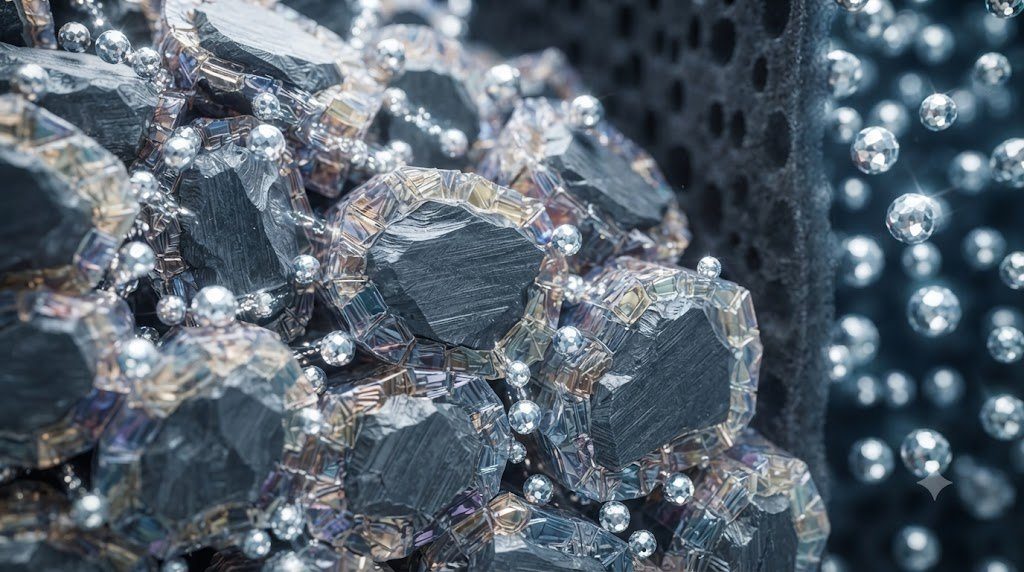
Instead of aggregating hundreds of tiny 100-nanometer crystallites into porous “meatball” secondary particles, high-temperature sintering produces large, monolithic, single-crystal grains measuring 2 to 5 microns across with zero internal grain boundaries. Under intense calendering pressures during electrode manufacturing and repeated high-voltage cycling, single-crystal particles do not shatter or develop internal micro-cracks. This innovation extends high-nickel NMC cycle life from 1,000 cycles to over 2,500 to 4,000 cycles, bringing ternary chemistry longevity within striking distance of LFP while maintaining premium energy density.
6. Thermal Runaway Kinetics and Mitigation Engineering
When high-nickel ternary cells enter thermal runaway, the decomposition cascade progresses through violent, self-accelerating stages:
- Stage 1 (80°C to 120°C): The Solid Electrolyte Interphase (SEI) layer on the graphite anode decomposes exothermically, allowing exposed lithiated graphite to react directly with organic carbonate solvent ($EC/DMC$).
- Stage 2 (130°C to 160°C): The porous polyolefin separator melts, causing localized micro-short circuits between anode and cathode.
- Stage 3 (160°C to 200°C): The delithiated cathode decomposes exothermically from layered $Rar3m$ to spinel ($Fdar3m$) and rock-salt ($Fmar3m$) phases, releasing large volumes of combustible oxygen gas ($O_2$). The released oxygen instantly oxidizes flammable solvent vapors, triggering explosive pressure rise (> 100°C/sec) and temperatures exceeding 900°C.
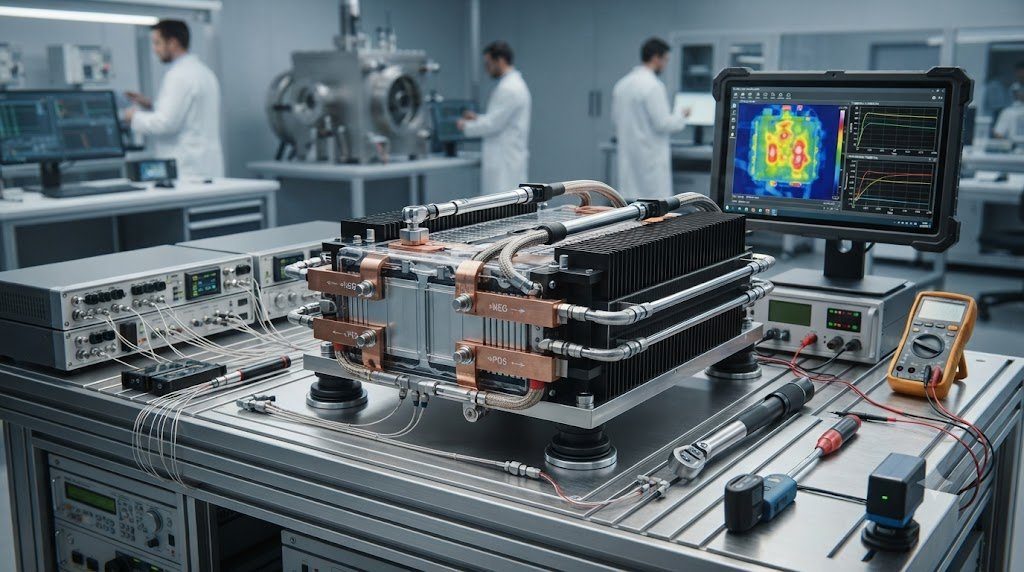
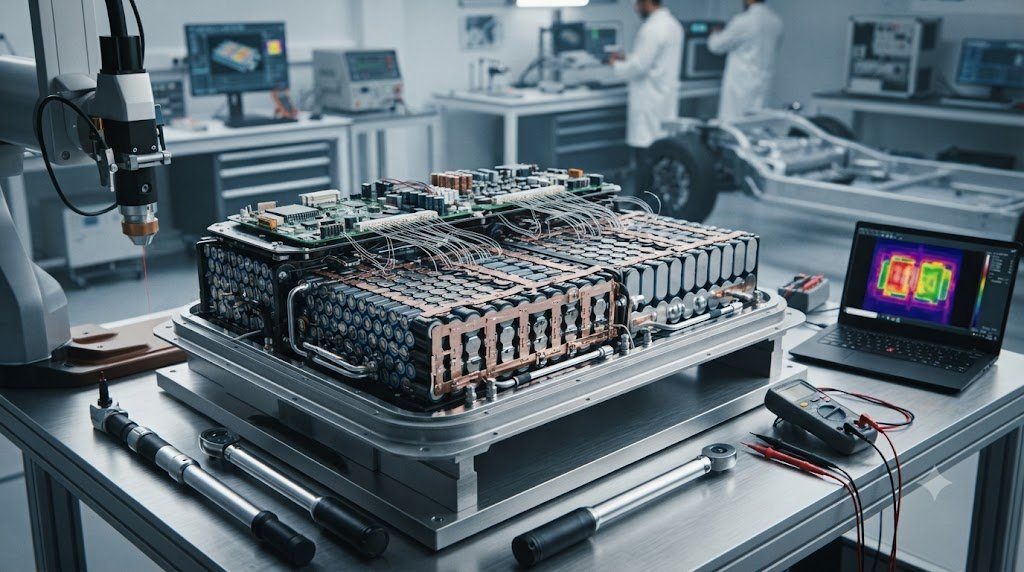
Automotive engineers counter this with module-level aerogel thermal insulation barriers, directional high-volume pressure relief burst valves, and mica flame-deflection shields to ensure that an individual failing cell does not propagate thermal runaway to adjacent cells (complying with UN ECE R100 and GB 38031 standards).
7. Industrial Precursor Synthesis: Hydroxide Co-Precipitation Kinetics
The commercial performance, tap density, and crystalline quality of ternary NMC cathodes are fundamentally determined during the wet chemical synthesis of their transition metal precursors via hydroxide co-precipitation in continuous stirred-tank reactors (CSTR):
- Stoichiometric Sulfate Solution Inflow: High-purity nickel sulfate ($NiSO_4$), manganese sulfate ($MnSO_4$), and cobalt sulfate ($CoSO_4$) salts are dissolved in deionized water at exact molar ratios and pumped continuously into the reaction chamber.
- Precision pH and Chelating Agent Regulation: Sodium hydroxide ($NaOH$) acts as the precipitating agent, while aqueous ammonia ($NH_3\cdot H_2O$) acts as a critical chelating agent. Ammonia complexes with transition metal cations to regulate crystallization growth kinetics, preventing sudden chaotic precipitation and ensuring dense, spherical particles with tap densities exceeding 2.4 g/cm³.
- High-Temperature Lithiation Sintering: The dried precursor hydroxide powder ($Ni_{1-x-y}Mn_xCo_y(OH)_2$) is intimately blended with lithium hydroxide ($LiOH\cdot H_2O$) or lithium carbonate ($Li_2CO_3$) and fed into multi-chamber roller hearth kilns at 750°C to 850°C under a continuous flow of pure oxygen ($O_2$) gas to ensure full oxidation of nickel into its trivalent active state.
8. Geopolitical Supply Chains and the European Battery Passport
High-nickel ternary batteries occupy the center of intense geopolitical scrutiny and rigorous international environmental regulation due to their reliance on critical minerals:
Over 70% of global cobalt extraction is concentrated in the Democratic Republic of the Congo (DRC), where artisanal mining practices have raised severe human rights and child labor concerns. Furthermore, Class 1 battery-grade nickel refining has historically generated intense environmental pollution through High-Pressure Acid Leaching (HPAL) of Indonesian laterite ores. To enforce supply-chain transparency, the European Union’s 2026 Battery Passport Directive mandates that every EV battery sold within the EU carry a digital QR code certifying its origin, ethical provenance, lifecycle carbon footprint (expressed in kg $CO_2$ per kWh), and mandatory minimum percentages of recycled cobalt (16%), nickel (6%), and lithium (6%).
9. High-Voltage Surface Passivation: Atomic Layer Deposition (ALD) Coatings
To operate high-nickel ternary cathodes reliably above 4.2V without triggering catastrophic structural degradation and electrolyte side reactions, chemical engineers apply ultra-thin, conformal ceramic coatings using Atomic Layer Deposition (ALD) and chemical vapor infiltration:
- Alumina and Titanium Oxide Nano-Shields ($Al_2O_3 / TiO_2$): Applying a sub-nanometer (2 to 5 atomic layers) conformal alumina film across primary NMC particles physically isolates highly catalytic $Ni^{4+}$ surface sites from direct contact with organic solvent molecules, slashing oxidative electrolyte decomposition by 80%.
- Hydrofluoric Acid Scavenging: The ceramic alumina coating actively reacts with and neutralizes trace hydrofluoric acid ($HF$) generated by $LiPF_6$ salt hydrolysis ($Al_2O_3 + 6HF o 2AlF_3 + 3H_2O$), preventing acid-driven etching and subsequent transition metal dissolution into the electrolyte.
- Fast-Ion Conducting Artificial CEI Layers: Advanced coatings incorporate lithium-conducting solid electrolytes—such as lithium phosphate ($Li_3PO_4$) or lithium tantalate ($LiTaO_3$)—which maintain rapid interfacial lithium transport while completely blocking electron tunneling, elevating high-voltage cycling retention past 85% after 2,000 cycles.
10. Cobalt-Free Alternatives: High-Voltage LNMO Spinel (LiNi0.5Mn1.5O4)
In the quest to eliminate cobalt entirely while maintaining energy density superior to LFP, materials scientists are scaling Lithium Nickel Manganese Spinel ($LiNi_{0.5}Mn_{1.5}O_4$ or LNMO):
Operating at an ultra-high 3D cubic spinel voltage of 4.7V vs. Li/Li⁺, LNMO delivers theoretical energy densities exceeding 650 Wh/kg at the cathode level without utilizing a single gram of cobalt. Its three-dimensional [110] cubic channels enable lightning-fast lithium diffusion, unlocking 10-minute fast-charging capabilities. However, commercializing LNMO requires developing specialized fluorinated electrolytes and high-voltage CEI film formers capable of surviving continuous 4.7V oxidative attack without electrolyte decomposition.
11. Frequently Asked Questions Regarding NMC and NCA Batteries
What do the numbers in NMC 811 mean?
They represent the stoichiometric ratio of transition metals: 80% Nickel, 10% Manganese, and 10% Cobalt in the cathode crystal lattice.
Why is high nickel content desirable in electric vehicle batteries?
Nickel provides high specific capacity and elevated operating voltage, which directly boosts gravimetric energy density (up to 300 Wh/kg) and vehicle driving range.
What is the primary role of cobalt in ternary cathodes?
Cobalt stabilizes the layered crystal structure, suppresses cation mixing, and enhances electrical conductivity to enable fast charging and high power discharge.
Why are battery makers trying to eliminate cobalt?
Cobalt is the most expensive cathode material, suffers from severe supply chain bottlenecks in the DRC, and carries significant ethical and environmental baggage.
What is cation mixing in high-nickel cathodes?
Cation mixing occurs when Ni2+ ions migrate into vacant Li+ sites during cycling because both ions have similar radii, blocking lithium channels and causing capacity loss.
What is the difference between polycrystalline and single-crystal NMC?
Polycrystalline particles consist of thousands of clumped micro-grains that crack under mechanical stress. Single-crystal NMC consists of monolithic grains that resist micro-cracking and last 3x longer.
Why does NMC release oxygen during thermal runaway?
At temperatures above 160°C, the delithiated cathode undergoes phase transformation to rock-salt structure, breaking metal-oxygen bonds and releasing oxygen that fuels violent fires.
What is NCA and who uses it?
NCA replaces manganese with aluminum. It is used extensively by Tesla and Panasonic, delivering exceptional energy density and high discharge power in premium vehicles.
What is the nominal voltage of an NMC cell?
NMC cells have a nominal voltage of 3.60V to 3.70V, with a full charge cut-off of 4.20V to 4.35V and discharge cut-off around 2.80V.
How long does an NMC battery last compared to LFP?
Standard NMC cells last 1,200 to 2,000 full cycles before reaching 80% health, whereas LFP cells routinely deliver 3,500 to 8,000+ cycles.