Lithium Iron Phosphate (LiFePO4 or LFP) has emerged as the global juggernaut of energy storage and electric mobility. Initially synthesized and identified by Nobel laureate John B. Goodenough and his research team at the University of Texas at Austin in 1996, LFP has revolutionized automotive electrification, off-grid solar storage, and utility-scale battery energy storage systems (BESS). Driven by its inherently safe olivine crystal structure, extraordinary thermodynamic resistance to thermal runaway, long cycle life exceeding 4,000 to 10,000 cycles, and complete elimination of scarce nickel and cobalt, understanding LFP’s electrochemistry and State-of-Charge (SoC) management is paramount for modern engineers.
The Olivine Lattice Advantage
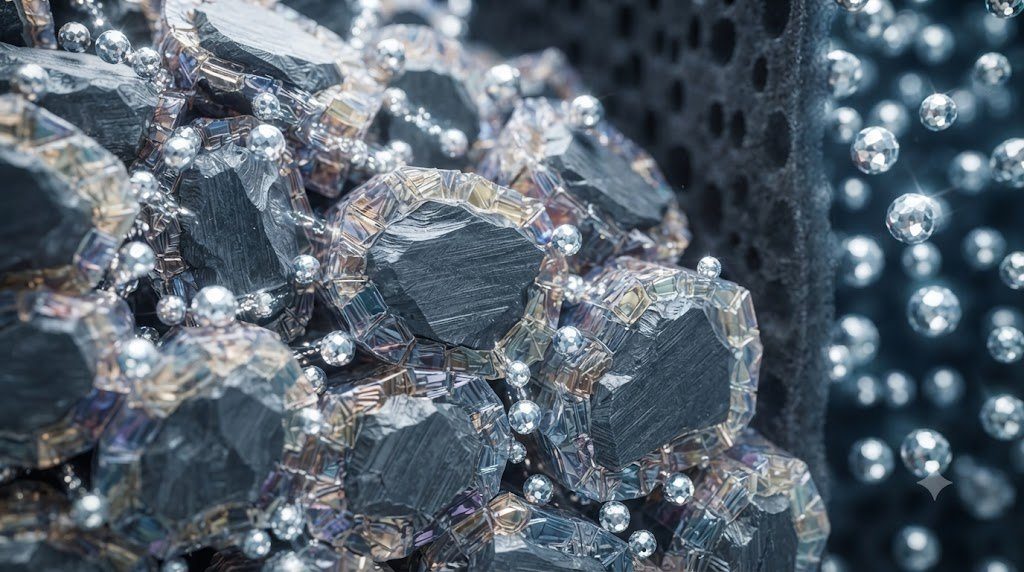
The fundamental safety of LiFePO4 stems from its orthorhombic olivine crystal lattice with strongly covalent P-O bonds. Unlike layered oxide cathodes (NMC/LCO) that release combustible oxygen gas at temperatures above 200°C, the phosphorus-oxygen covalent bonds in LiFePO4 remain structurally stable up to 500°C, making thermal runaway virtually impossible under normal physical abuse.
1. Crystallography and Atomic Architecture: The Olivine Framework
Lithium iron phosphate crystallizes in an orthorhombic olivine structure belonging to the space group Pnma. In this crystalline arrangement:
- Phosphorus Tetrahedra ($PO_4^{3-}$): Phosphorus atoms are coordinated with four oxygen atoms in rigid, strongly covalent tetrahedral units. These covalent bonds exhibit immense bond dissociation energies, physically locking oxygen within the crystal lattice even when fully delithiated into $FePO_4$.
- Iron Octahedra ($FeO_6$): Divalent iron ions ($Fe^{2+}$) occupy corner-sharing octahedral sites, forming zigzag chains running parallel to the c-axis.
- One-Dimensional Lithium Diffusion Channels: Monovalent lithium ions ($Li^+$) reside in edge-sharing octahedral sites aligned along the one-dimensional [010] crystallographic direction. Lithium ions can only hop linearly along these narrow parallel tunnels; they cannot migrate laterally into adjacent planes.
The Two-Phase Delithiation Mechanism
During electrochemical extraction of lithium (battery charging), $LiFePO_4$ transforms directly into heterosite iron phosphate ($FePO_4$) via a first-order two-phase transition:
ightleftharpoons x Li⁺ + x e⁻ + (1-x) LiFePO₄ + x FePO₄
Because both phases ($LiFePO_4$ and $FePO_4$) coexist in thermodynamic equilibrium across almost 90% of the state-of-charge spectrum, the Gibbs phase rule dictates that the chemical potential of lithium remains constant. This generates the famously flat, stable open-circuit voltage (OCV) plateau at exactly 3.20 to 3.25 V vs. Li/Li⁺ (or ~3.45V under charging cut-off).
2. Overcoming Intrinsic Limitations: Carbon Coating and Nanostructuring
In its pristine natural state, synthesized $LiFePO_4$ is an electrical insulator and a sluggish ionic conductor:
- Electronic Conductivity Bottleneck: Pure $LiFePO_4$ has a massive electronic bandgap (~0.3 eV), yielding an electrical conductivity of less than $10^{-9}$ S/cm—lower than standard window glass! Early researchers concluded it was commercially useless for high-current applications.
- Channel Blockage via Antisite Defects: Because lithium diffusion is strictly one-dimensional along [010] channels, if an occasional iron atom mistakenly occupies a lithium site (an antisite defect, $Fe_{Li}^ullet$), it acts as an impenetrable boulder blocking the entire tunnel, trapping all lithium ions behind it.
The commercial breakthrough that rescued LFP was pioneered by Michel Armand, Yet-Ming Chiang, and Phostech Lithium through two revolutionary engineering strategies:
- Nanocrystallization: Synthesizing primary LFP particles with diameters below 50 to 100 nanometers reduces the linear diffusion path length that lithium ions must travel, shortening hopping times from hours to milliseconds ($t \propto L^2 / D$).
- In-Situ Conductive Carbon Pyrolysis: Coating each individual nanoparticle with a continuous 2-to-3-nanometer conductive pyrolytic carbon shell (using organic pitch or sucrose precursors) forms a microscopic percolating electrical grid, boosting effective electronic conductivity by over seven orders of magnitude to $10^{-2}$ S/cm.
3. The Flat Voltage Curve Dilemma and BMS State-of-Charge (SoC) Calibration
While the ultra-flat discharge voltage curve provides rock-solid voltage delivery to electric motors and inverters, it poses a notorious headache for Battery Management Systems (BMS):
In ternary NMC or lead-acid batteries, cell voltage slopes continuously from full to empty, allowing a simple voltmeter reading to accurately determine remaining capacity. In LFP, the cell voltage between 15% and 85% SoC varies by less than 0.05 volts (resting at approximately 3.28V to 3.32V). A voltage change of merely 2 millivolts can represent a 30% swing in capacity! Consequently, open-circuit voltage measurements inside this window cannot determine State of Charge.
Coulomb Counting and Full-Saturation Re-Calibration
To track remaining energy, LFP battery controllers must rely on Coulomb counting (integrating current over time, $\int I \, dt$) combined with Kalman filtering algorithms. However, Coulomb counting suffers from progressive numerical drift over time due to sensor calibration tolerances and parasitic self-discharge. To reset this drift, LFP battery packs (including Tesla Model 3 Standard Range and BYD Blade Battery packs) must periodically be charged to 100% saturation (3.65V per cell). Reaching the steep upper voltage “knee” provides an absolute mathematical reference point for the BMS algorithm to re-synchronize its 100% SoC register and execute passive cell balancing.
| Property / Metric | Lithium Iron Phosphate (LFP) | Nickel Manganese Cobalt (NMC 811) |
|---|---|---|
| Cathode Chemical Formula | LiFePO4 (Olivine) | LiNi0.8Mn0.1Co0.1O2 (Layered Oxide) |
| Nominal Cell Voltage | 3.20 V – 3.25 V | 3.60 V – 3.70 V |
| Cell Gravimetric Energy Density | 160 – 190 Wh/kg | 250 – 300 Wh/kg |
| Cell Volumetric Energy Density | 350 – 450 Wh/L | 650 – 750 Wh/L |
| Thermal Runaway Onset Temp | 270°C – 320°C (Stable P-O bonds) | 150°C – 180°C (Releases oxygen) |
| Cycle Life (80% Capacity Retention) | 3,500 – 8,000+ full cycles | 1,200 – 2,000 full cycles |
| Raw Material Geopolitics | Abundant iron & phosphate; zero cobalt | Heavy reliance on refined cobalt & nickel |
| Cold Temperature Performance (-20°C) | Poor charge acceptance (High impedance) | Moderate to good charge acceptance |
4. Thermal Runaway Resistance: Why LFP Rarely Catches Fire
Thermal runaway in lithium-ion cells is triggered when internal temperatures reach a critical threshold, initiating self-sustaining exothermic chain reactions that generate heat faster than can be dissipated. In layered NMC cathodes, delithiated nickel oxide decomposes at approximately 150°C to 180°C, releasing free elemental oxygen ($O_2$) into the cell casing. This free oxygen combusts violently with the hot organic carbonate solvent, causing instantaneous deflagration and explosive fires.
In sharp contrast, LFP’s olivine lattice locks oxygen within covalent phosphate groups ($PO_4^{3-}$) up to at least 500°C. Even during extreme nail-penetration tests, mechanical crushing, or external overcharge, LFP cells release steam, non-toxic electrolyte vapor, and smoke without open flame or explosive propagation. This unmatched safety profile has made LFP the universal standard for residential home storage (Tesla Powerwall 3, Enphase, SolarEdge) and commercial grid storage installations globally.
5. Low-Temperature Lithium Plating and Diffusion Kinetics
Despite its stellar safety and cycle life, LFP suffers from poor electrochemical performance in freezing weather. Below 0°C, three kinetic barriers compound:
- Increased Solid-State Diffusion Resistance: The hopping rate of lithium ions through 1D olivine channels drops exponentially according to the Arrhenius relation ($D_{Li} \propto \exp(-E_a / k_B T)$).
- Sluggish Charge-Transfer at SEI: The de-solvation of lithium ions and their transfer across the Solid Electrolyte Interphase (SEI) layer on the graphite anode becomes extremely sluggish.
- Metallic Lithium Plating Hazard: If an LFP battery is charged at high current rates below freezing without pre-heating, the overpotential on the graphite anode drops below 0.00 V vs. Li/Li⁺. Instead of safely intercalating into the graphite crystal sheets, lithium ions reduce into raw metallic lithium that plates onto the anode surface. Over repeated cold charging cycles, these metallic deposits form needle-like lithium dendrites that pierce the separator, causing permanent short circuits and catastrophic cell death.
6. Cell-to-Pack (CTP) Innovations: The BYD Blade and CATL Shenxing Batteries
Historically, LFP’s lower gravimetric energy density (160 Wh/kg vs. 270 Wh/kg for NMC) limited vehicle driving ranges to under 200 miles. Automotive battery manufacturers overcame this not by altering the chemistry, but through revolutionary structural packaging known as Cell-to-Pack (CTP) architecture:
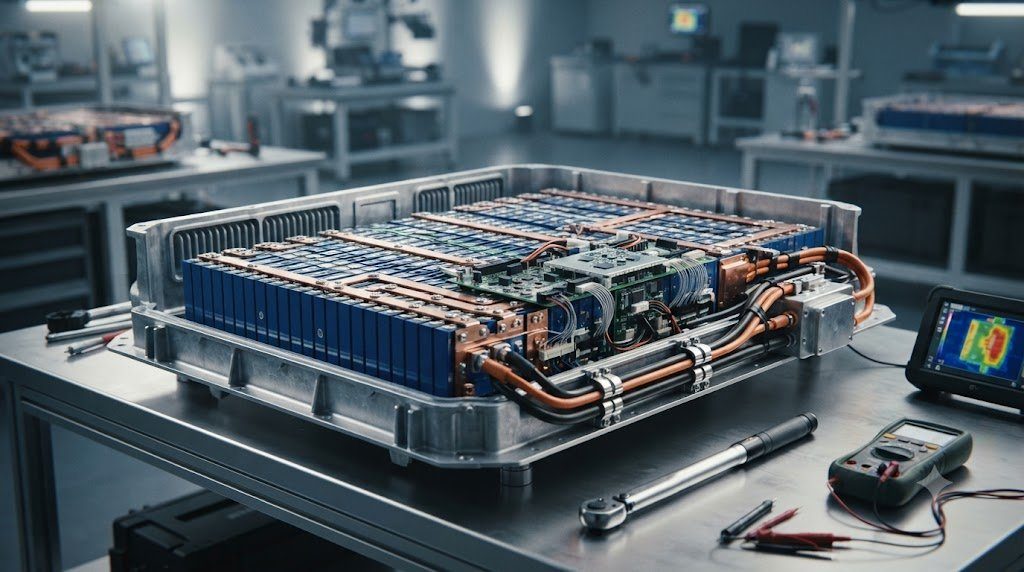
In traditional battery packs, individual cells are wired into modules, modules are mounted onto crossbeams, and modules are housed inside the outer battery enclosure—wasting over 50% of internal pack volume on inactive steel brackets, wiring harnesses, and coolant manifolds. Innovations like the BYD Blade Battery use long, thin prismatic cells (up to 96 cm long) that serve as load-bearing structural beams within the chassis. By eliminating modules entirely, volume utilization efficiency increased from 40% to over 60% to 72%, allowing budget electric vehicles to achieve 350-to-400-mile ranges using purely low-cost LFP chemistry!
8. High-Rate 4C Fast Charging Breakthroughs: CATL Shenxing Battery
Historically, LFP batteries were relegated to slow charging speeds (rarely exceeding 1C to 1.5C) because slow 1D lithium ion hopping within the olivine lattice caused severe polarization and lithium plating under high currents. However, modern nanotechnology innovations—exemplified by CATL’s Shenxing 4C Superfast Charging LFP Battery—have demolished this performance ceiling:
- Super-Conductive Cathode Network: By engineering fully nanocrystallized LFP particles embedded within a 3D carbon nanotube (CNT) and graphene multi-level conductive network, electrical resistance within the cathode is reduced by over 60%, allowing instantaneous electron transfer during 400A peak charging bursts.
- Second-Generation Fast-Ion Ring Graphite Anode: The anode graphite particles are modified with an isotropic, multi-directional crystalline coating that creates omnidirectional lithium insertion highways, slashing charge-transfer resistance at the solid-electrolyte interface.
- Ultra-High Conductivity Super-Lithium Electrolyte: Formulated with low-viscosity carboxylate esters and high-dissociation lithium bis(fluorosulfonyl)imide ($LiFSI$) salts, the liquid electrolyte conducts ions at double the speed of traditional $LiPF_6$ formulations, enabling a 400-kilometer (250-mile) range charge in just 10 minutes at standard ambient temperatures.
9. Direct Hydrometallurgical Recycling and Cathode Regeneration
Because LFP cathodes contain neither expensive cobalt nor high-value nickel, traditional pyrometallurgical smelting (which burns off lithium and iron to recover cobalt alloy) is economically unviable. Consequently, the commercial recycling of spent LFP battery packs relies on innovative direct cathode regeneration and hydrometallurgical relithiation:
Spent cells are mechanically shredded under an inert nitrogen blanket to safely discharge residual energy and recover aluminum and copper foils. The remaining cathode “black mass” is subjected to mild organic acid leaching (using citric or oxalic acid) followed by hydrothermal relithiation in a concentrated lithium hydroxide ($LiOH$) solution at 180°C. This low-temperature hydrothermal process directly inserts lithium ions back into degraded, lithium-deficient $FePO_4$ crystal lattices without destroying the primary olivine particle architecture. The regenerated LFP powder achieves over 98% of pristine cathode capacity at half the carbon footprint and cost of newly synthesized precursor materials.
10. Frequently Asked Questions Regarding LiFePO4 (LFP) Batteries
What is the nominal voltage of a LiFePO4 cell?
A single LiFePO4 cell has a nominal voltage of 3.20 to 3.25 volts, with a maximum charge cut-off of 3.65V and a low-voltage discharge cut-off of 2.50V.
Why is LiFePO4 considered much safer than NMC?
LFP has a strong covalent phosphorus-oxygen olivine crystal lattice that does not release flammable oxygen gas under high heat or mechanical puncture, preventing thermal runaway fires.
How many cycles can an LFP battery last?
High-quality LFP cells routinely deliver between 3,500 and 8,000+ full charge/discharge cycles before dropping to 80% original capacity, lasting 10 to 15+ years.
Why is it hard to measure the State of Charge (SoC) of an LFP battery by voltage?
Because LFP exhibits an exceptionally flat discharge voltage plateau between 15% and 85% SoC; voltage changes by only millivolts across broad capacity shifts.
Why should you charge an LFP electric car to 100% regularly?
Charging to 100% reaches the steep upper voltage knee, which allows the BMS algorithm to accurately calibrate Coulomb counting and balance individual series cells.
Can you charge an LFP battery below freezing (0°C)?
No. Charging an LFP battery below 0°C without a pre-heating system causes metallic lithium plating on the graphite anode, permanently damaging the cell and risking short circuits.
Does LFP contain cobalt or nickel?
No. LFP uses abundant iron and phosphate, completely eliminating expensive, ethically problematic cobalt and nickel from the supply chain.
What is a BYD Blade Battery?
It is an ultra-long, structural prismatic LFP cell that acts as a structural crossbeam inside the pack, eliminating intermediate modules to achieve 60%+ volumetric efficiency.
What is LMFP and how does it improve upon standard LFP?
LMFP adds manganese to the olivine lattice, raising nominal voltage from 3.2V to 3.7V and increasing gravimetric energy density by 15-20% without losing phosphate safety.
Why is LFP the dominant chemistry in stationary grid storage (BESS)?
Grid storage prioritizes levelized cost per kilowatt-hour, 10,000-cycle durability, and zero fire propagation risk over minimal weight, making LFP the ideal choice.