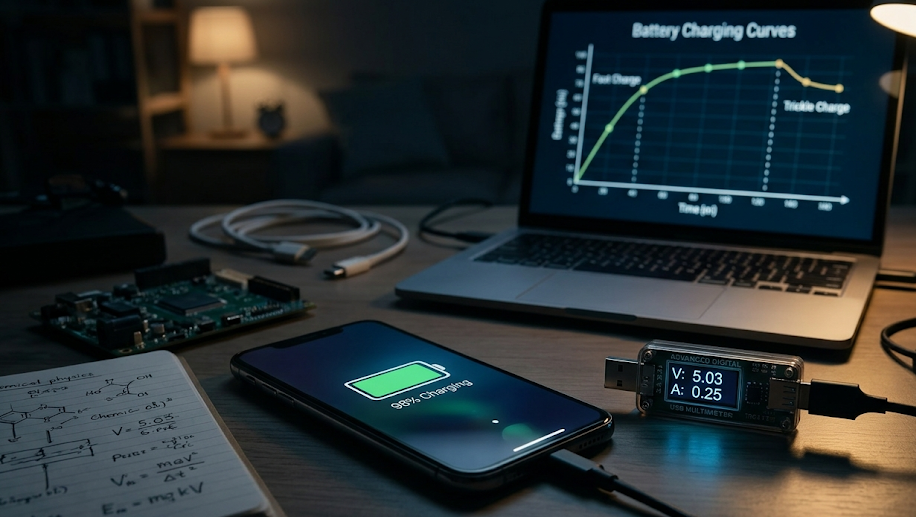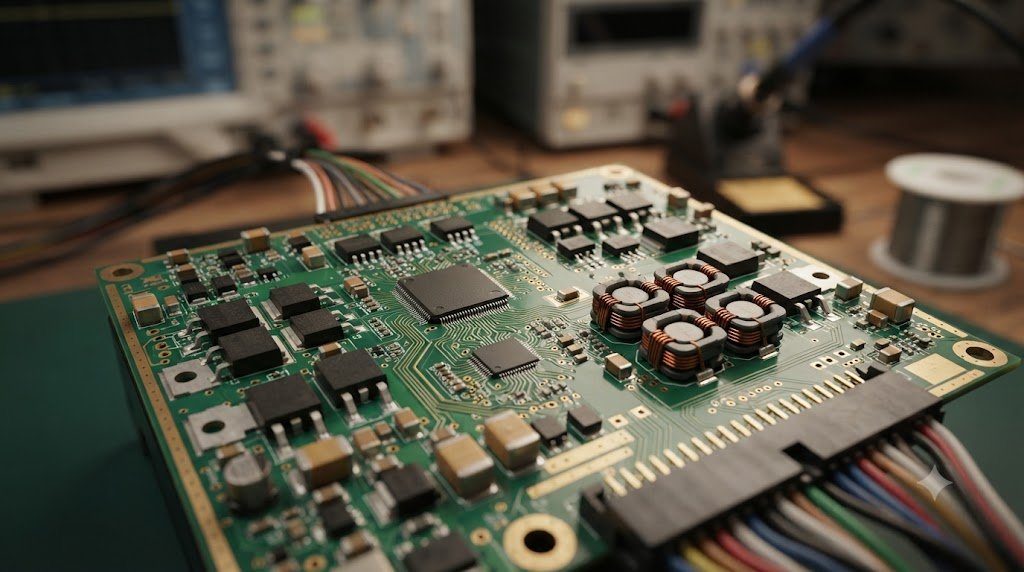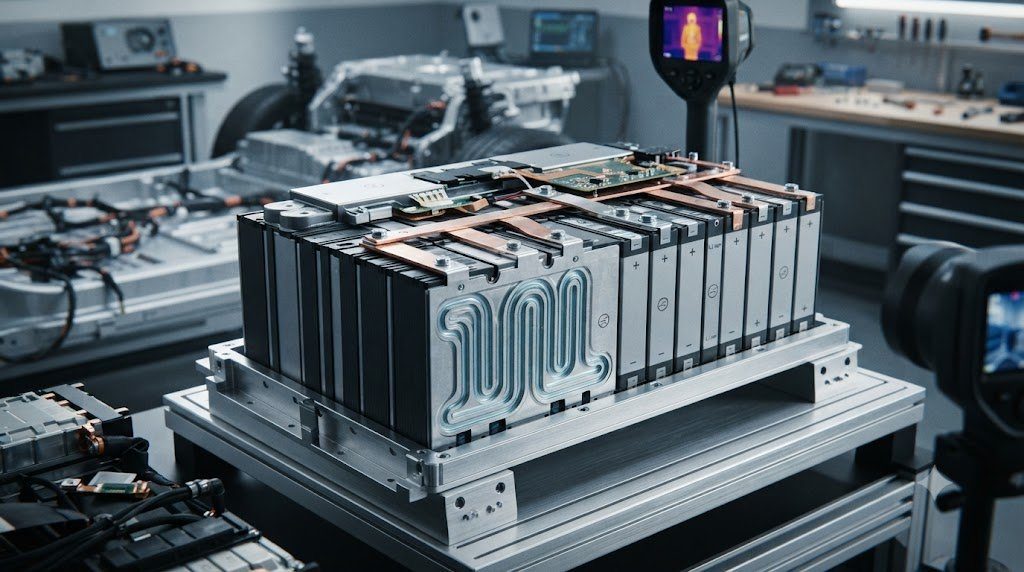
Rechargeable lithium-ion batteries are profoundly sensitive electrochemical systems operating within a strictly unforgiving thermal window. For optimal performance, energy efficiency, and longevity, cell operating temperatures must be maintained between 20°C and 35°C, with temperature variations across the entire multi-thousand-cell pack restricted to less than ±2°C to 3°C. Operating below 0°C triggers metallic lithium plating, while exceeding 55°C accelerates irreversible solid-electrolyte interphase breakdown and thermal runaway. Engineering a high-performance Battery Thermal Management System (BTMS)—from forced air and aluminum cold plates to Phase Change Materials (PCM) and revolutionary direct-immersion dielectric cooling—represents the defining prerequisite for electric vehicle safety and multi-megawatt grid reliability.
The Core Mandate of BTMS Engineering
A battery thermal management system is not simply an engine radiator. It is a bidirectional climate control plant that must rapidly heat frozen cells from -30°C in arctic winters while evacuating up to 30 to 50 kilowatts of intense Joule heat during extreme fast-charging sessions in desert summers, all while ensuring zero thermal propagation if a cell fails.
1. Heat Generation Physics in Lithium Cells: Bernardi Heat Source Model
Quantifying heat generation inside a lithium cell begins with the foundational Bernardi thermodynamic heat source equation:
Internal heat generation ($q$) comprises two distinct physical mechanisms:
- Irreversible Joule / Overpotential Heating ($I \cdot (V – E_{OCV}) = I^2 \cdot R_{int}$): Always positive (exothermic). Originates from electrical resistance in copper/aluminum foils, tabs, and bulk electrolyte, combined with electrochemical charge-transfer overpotentials at electrode interfaces. Scales quadratically with current.
- Reversible Entropic Heating ($I \cdot T \cdot d(E_OCV)/dT$): Originates from reversible structural entropy changes in crystal lattices during lithium ion intercalation. Depending on the chemical phase transition and whether the cell is charging or discharging, the entropic coefficient ($d(E_OCV)/dT$) can be exothermic (generating heat) or endothermic (absorbing heat).
2. Evolution of Cooling Topologies: Air, Liquid, PCM, and Immersion
Over three decades of electric vehicle evolution, thermal management technologies have advanced through four generations of engineering sophistication:
| Thermal Architecture | Cooling Medium | Heat Transfer Coefficient (W/m²·K) | System Complexity | Thermal Uniformity (ΔT across pack) | Fast-Charge Capability (XFC) |
|---|---|---|---|---|---|
| Forced Air Cooling (Gen 1) | Ambient or refrigerated cabin air | 20 – 100 W/m²·K (Poor) | Low (Fans + simple ducting) | Poor (ΔT > 5°C – 10°C, hot spots) | Utterly inadequate (< 50 kW only) |
| Indirect Liquid Cold Plates (Gen 2/3) | Water-Ethylene Glycol (50/50 mix) | 1,000 – 3,000 W/m²·K (High) | Moderate to High (Pumps, chiller, valves) | Excellent (ΔT < 2°C – 3°C) | Capable up to 150 kW – 250 kW |
| Phase Change Materials (PCM) | Paraffin wax with graphite matrix | Latent heat absorption (200 kJ/kg) | Passive (Zero pumps, high mass) | Very Good (Clamps temp at melting point) | Limited (Saturates during repeated cycles) |
| Direct Immersion Cooling (Gen 4) | Dielectric fluorinated / synthetic oil | 5,000 – 15,000+ W/m²·K (Extreme) | High (Hermetic seals, fluid filtration) | Flawless (ΔT < 1°C across all cells) | Unrestricted (350 kW – 500+ kW continuous) |
3. Indirect Liquid Cooling: Cold Plate Design, Micro-Channels, and Thermal Pastes
Indirect liquid cooling dominates over 90% of current commercial electric vehicles (including Tesla Model 3/Y, Ford Mustang Mach-E, and Volkswagen ID.4):
Extruded Aluminum Cold Plate Architecture
A 50/50 mixture of water and ethylene glycol (WEG) circulates through extruded aluminum plates embedded with internal micro-channel coolant runners. Aluminum is chosen for its exceptional thermal conductivity (~200 W/m·K) and low mass. In cylindrical cell packs (such as Tesla’s 2170 and 4680 architectures), serpentine liquid cooling ribbons snake between adjacent rows of cells, contacting individual cell steel cans along their cylindrical walls.
Thermal Interface Materials (TIM) and Gap Fillers
Because microscopic microscopic air gaps between metal battery cans and aluminum cold plates act as severe thermal insulators (air thermal conductivity is a miserable 0.026 W/m·K), engineers dispense elastomeric Thermal Interface Materials (TIM): polyurethane or silicone gap fillers loaded with alumina or boron nitride ceramic particles. High-performance TIMs achieve bulk thermal conductivities of 2.0 to 4.0 W/m·K, bridging physical gaps and slashing thermal contact resistance.
4. Direct Immersion Cooling: The Ultimate Frontier in Thermal Evacuation
In extreme fast charging (350 kW+) and high-performance hypercars (Rimac Nevera, McLaren Artura), indirect liquid cold plates hit a physical ceiling: heat must travel through cell walls, TIM layers, and aluminum plate barriers before reaching the fluid. The cutting edge of BTMS engineering is Direct Immersion Cooling:
- Dielectric Fluids: Battery cells, busbars, and power electronics are completely submerged in a specialized non-conductive, dielectric fluid—typically synthetic hydrocarbon fluids (engineered by Shell or Castrol) or fluorinated liquids (3M Novec). With electrical breakdown voltages exceeding 40 kV, the fluid conducts zero electrical current and poses zero short-circuit danger.
- Direct Contact Evacuation: Dielectric fluid bathes 100% of the cell surface area, including electrical terminal tabs where up to 40% of internal heat concentrates. Heat transfer coefficients surpass 10,000 W/m²·K, eliminating thermal resistance barriers.
- Inherent Fire Extinguishment: If a single cell undergoes internal catastrophic failure, the surrounding non-flammable dielectric fluid instantly quenches sparks, absorbs released thermal energy, and halts thermal runaway propagation to neighboring cells.
5. Phase Change Materials (PCM): Passive Thermal Buffering
For lightweight micromobility, electric motorcycles, and defense drones where heavy liquid cooling pumps, radiators, and plumbing cannot be accommodated, engineers deploy Phase Change Materials (PCM):
Paraffin waxes engineered with melting points between 35°C and 45°C are impregnated into expanded graphite foam matrices. When battery cells experience aggressive peak power draws, the wax absorbs immense thermal energy by melting from solid to liquid, absorbing over 180 to 220 kJ/kg of latent heat without increasing in temperature. The expanded graphite foam provides high thermal conductivity (5 to 15 W/m·K) to disperse heat evenly throughout the block. Once load drops, the wax slowly solidifies, releasing stored heat to ambient surroundings.
6. Sub-Zero Cold Weather Heating Strategies: Heat Pumps and PTC Elements
In sub-zero winter temperatures (-20°C to -40°C), the BTMS must act as a powerful heating system to prevent lithium plating and restore cabin comfort:
- High-Voltage Positive Temperature Coefficient (PTC) Heaters: Ceramic resistive elements powered directly from the 400V/800V traction pack warm the circulating coolant. While effective, resistive heating has a coefficient of performance (COP) of 1.0, consuming significant energy and reducing winter driving range by up to 30%.
- Reversible Octovalve Heat Pump Systems: Modern vehicles (such as Tesla’s Octovalve architecture) utilize advanced multi-directional refrigerant heat pumps with a COP of 2.5 to 3.5. The system can scavenge waste heat from electric drive motors and power inverters, amplifying that energy and directing it into the battery pack to warm cells rapidly with minimal traction battery drain.
- Internal AC Joule Self-Heating: Revolutionary internal heating methods apply high-frequency alternating current (1 kHz to 10 kHz) across cell terminals. Because alternating current reverses faster than lithium ion intercalation kinetics, ions oscillate without plating while internal ohmic resistance generates rapid, uniform volumetric heat from the inside out at rates exceeding 3°C to 5°C per minute.
7. Thermal Runaway Mitigation and Barrier Aerogels
A critical life-safety requirement of modern automotive battery enclosures (mandated by international safety regulation UN GTR No. 20) is preventing thermal runaway propagation:
- Silica Aerogel Thermal Barriers: Micro-thin (1.0 to 2.0 mm) aerogel insulation sheets are inserted between adjacent battery cells or cell modules. Aerogels feature microscopic nanopores that trap air, achieving record-low thermal conductivities (< 0.020 W/m·K). If an adjacent cell bursts into a 1,000°C inferno, the aerogel barrier keeps neighboring cell temperatures below 80°C, halting chain-reaction propagation.
- Directional Venting and Pressure Release Pyrotechnic Valves: Battery enclosures feature burst discs or spring-loaded pressure valves that pop open when cell venting gases spike internal pack pressure. High-temperature metal deflectors route toxic flames and hydrofluoric acid gas safely out the bottom rear of the vehicle, away from passenger cabin compartments.
8. BMS Thermal Control Algorithms: Closed-Loop Pump and Chiller Modulation
Managing BTMS hardware requires continuous, closed-loop software control running inside the vehicle supervisory controller:
Dozens of high-precision NTC thermistors embedded across modules feed temperature data to the BMS. Proportional-Integral-Derivative (PID) and model-predictive control (MPC) loops continuously modulate variable-speed coolant pump RPM and electronic expansion valve (EXV) chiller refrigerant flow. By forecasting heat generation based on upcoming GPS route topography and driver acceleration history, the controller proactively chills the pack before high-power highway climbs, preventing temperature overshoots.
9. Utility-Scale Energy Storage (BESS) Container Thermal Management
In 20-foot to 40-foot containerized grid battery systems housing 3 to 5 megawatt-hours of lithium cells, thermal management is transitioning en masse from legacy HVAC air-conditioning to integrated liquid cold plate loops:
Air-conditioned BESS containers suffered notorious thermal gradient problems: cells located directly in front of cold air vents ran at 20°C, while cells located in back corners baked at 35°C. This 15°C delta caused rapid pack imbalance and premature cell failures. Modern liquid-cooled containers circulate coolant directly through rack-level cold plates, holding temperature deltas under ±2.5°C across 10,000 cells, slashing auxiliary parasitic power consumption by 40%, and increasing container energy density by 100%.
10. Cell-to-Pack (CTP) and Cell-to-Chassis (CTC) Structural Thermal Integration
The latest revolution in electric vehicle battery pack design is the elimination of intermediate modular enclosures, transitioning directly from individual cells to structural packs (Cell-to-Pack – CTP) and vehicle bodies (Cell-to-Chassis – CTC):
In legacy modular architectures, cells were bolted into small 12-cell modules, which were then wired inside a heavy external steel pack casing. This nested construction introduced multiple layers of structural plastic, dead air spaces, and redundant aluminum walls that severely obstructed thermal dissipation. Pioneered by BYD’s Blade Battery and Tesla’s structural 4680 pack, modern CTP integration achieves unprecedented thermal synergy:
- Structural Multi-Functionality: The cooling plate itself serves as the bottom structural shear web of the vehicle chassis, bonded directly to battery cells using high-strength structural polyurethane adhesives with high thermal conductivity (> 2.5 W/m·K).
- Dual-Sided Tab and Bottom Cooling: In high-power CTC designs, coolant ribbons contact both the bottom casing and the upper electrical busbar collectors. Because up to 40% of internal heat is generated at cell terminal tabs due to high-amperage current constriction, cooling the tabs directly prevents longitudinal core thermal gradients, slashing maximum internal cell temperatures by up to 8°C during sustained autobahn speeds.
- Volumetric Packaging Efficiency: By eliminating module side walls and wiring harnesses, CTP and CTC designs raise volumetric pack utilization from 40% to over 65%, allowing vehicle manufacturers to pack 20% to 30% more kilowatt-hours into the same physical underbody footprint while enhancing overall vehicle torsional stiffness.
11. Frequently Asked Questions Regarding Battery Thermal Management
What is the ideal operating temperature range for a lithium-ion battery?
The sweet spot is between 20°C and 35°C; staying in this range maximizes cycle life, safety, and energy efficiency.
What is the Bernardi heat equation?
A mathematical formula that calculates heat generation inside a cell by combining irreversible ohmic resistance losses with reversible chemical entropy changes.
Why is liquid cooling superior to air cooling in electric vehicles?
Water-glycol coolant has a heat capacity over 4,000 times higher than air, providing vastly superior heat evacuation and tighter temperature uniformity across the pack.
What is Direct Immersion Cooling in battery technology?
Submerging cells and terminals directly in non-conductive dielectric fluid, removing thermal resistance barriers and enabling extreme 500 kW fast charging.
What are Thermal Interface Materials (TIM) and why are they needed?
TIMs are thermally conductive gap fillers that eliminate insulating air pockets between metal battery cells and aluminum cooling plates.
How does cold weather affect lithium batteries?
Sub-zero cold spikes internal electrolyte viscosity and slows lithium diffusion, causing massive range loss and risking metallic lithium dendrite plating if charged.
What is an Octovalve heat pump system?
A multi-directional heat pump valve that routes waste heat from motors, inverters, and battery to warm the pack and cabin with maximum energy efficiency.
What is Phase Change Material (PCM) in battery cooling?
Paraffin waxes that absorb massive latent heat by melting at 35°C–45°C, providing passive thermal buffering for lightweight e-bikes and drones.
What role do aerogel barriers play in battery pack safety?
Aerogels are ultra-low-conductivity ceramic insulators placed between cells that block 1,000°C flames, preventing thermal runaway from propagating to adjacent cells.
Why are containerized grid batteries switching from HVAC to liquid cooling?
Liquid cooling eliminates hot spots across multi-megawatt packs, keeps cell temperature deltas under 2.5°C, and saves 40% in auxiliary operating energy.
What happens if a battery exceeds 55°C during operation?
Solid Electrolyte Interphase (SEI) layers decompose, parasitic chemical reactions accelerate, gas pressure builds, and cells enter irreversible thermal degradation.
What is AC internal self-heating for cold batteries?
Applying high-frequency alternating current across cell terminals to generate uniform internal heat via resistance without intercalating lithium or causing plating.