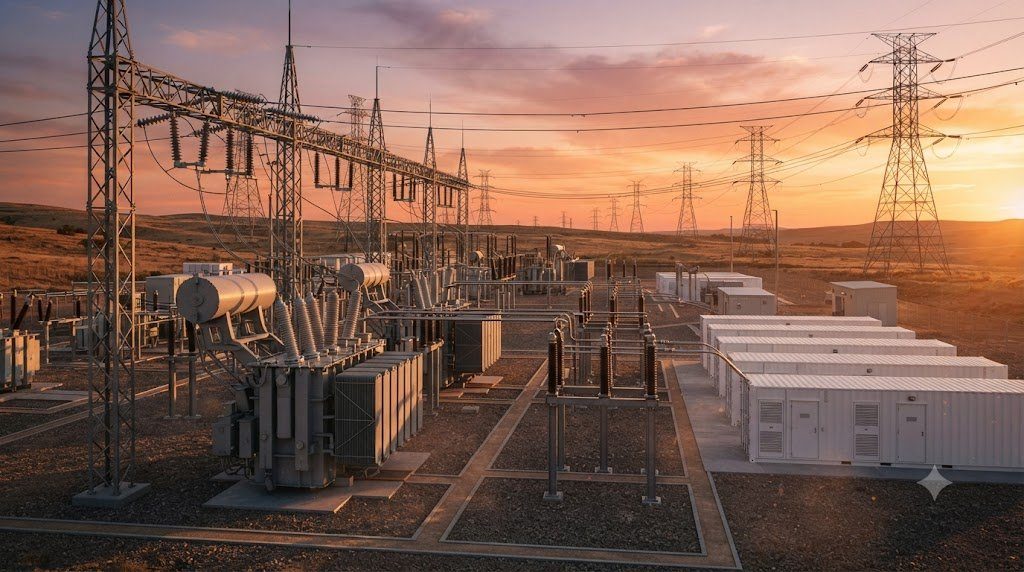
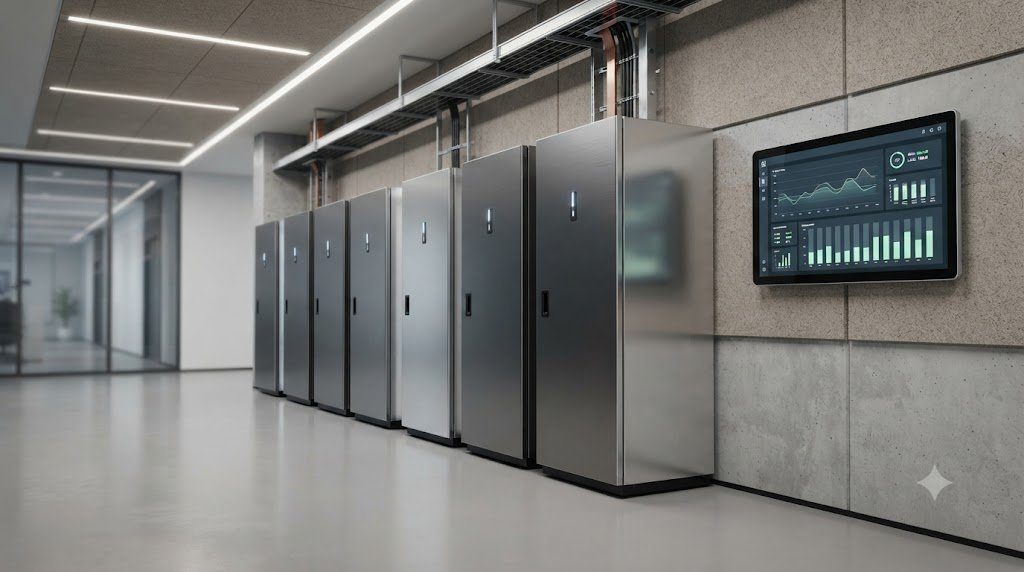
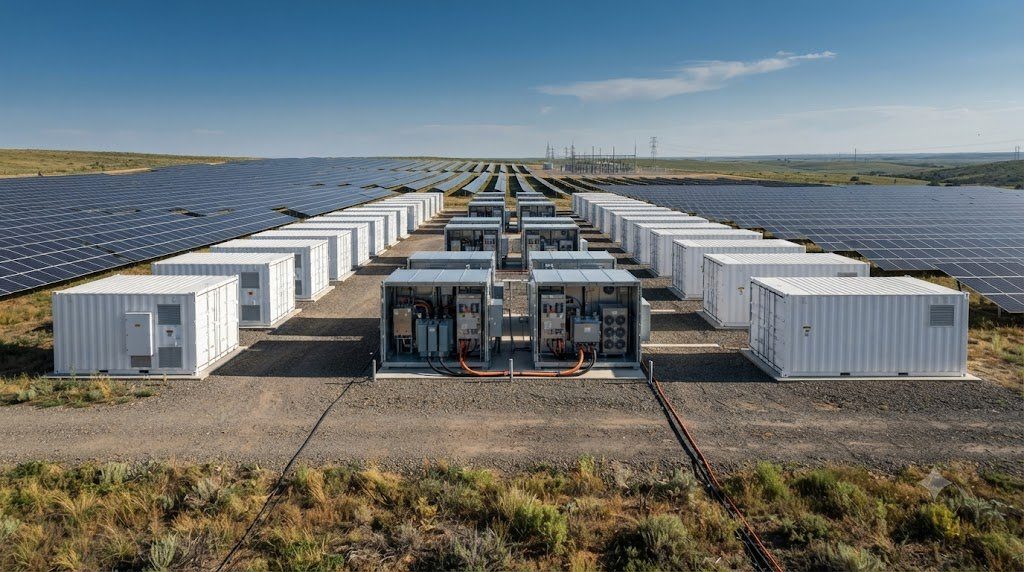
As stationary Battery Energy Storage Systems (BESS) scale into multi-megawatt-hour installations deployed near industrial centers, urban electrical substations, and commercial buildings, safety engineering has emerged as the definitive paramount discipline of the energy storage industry. High-profile fire incidents—such as the 2019 McMicken explosion in Arizona and the 2021 Victorian Big Battery fire in Australia—catalysed a complete regulatory overhaul of energy storage engineering. Mastering modern BESS safety standards—principally UL 9540, UL 9540A large-scale fire testing, NFPA 855, deflagration explosion venting (NFPA 68/69), thermal runaway barriers, and advanced clean-agent fire suppression systems—is the non-negotiable foundation of grid reliability.
The Core Challenge of Thermal Runaway in BESS
A lithium-ion battery fire is not a conventional chemical fire that can simply be smothered by depriving it of atmospheric oxygen. During deep thermal runaway, decomposing cathode transition metal oxides release pure oxygen gas internally, sustaining intense combustion inside sealed cells while generating thousands of cubic feet of explosive off-gases (H2, CO, CH4). Safety requires holistic multi-barrier prevention, containment, and deflagration mitigation.
1. Thermal Runaway Off-Gas Dynamics: The Explosion Hazard
To understand BESS fire codes, one must analyze the four sequential stages of lithium-ion cell thermal degradation:
- Stage 1: SEI Layer Decomposition (80°C to 120°C): The metastable Solid Electrolyte Interphase begins breaking down exothermically, exposing lithiated graphite to liquid organic solvent.
- Stage 2: Anode-Solvent Reaction and Early Off-Gassing (120°C to 140°C): Parasitic reactions generate microscopic gas bubbles. Cell internal pressure builds until the safety rupture vent pops, releasing aerosolized carbonate solvent vapors and volatile organic compounds (VOCs).
- Stage 3: Separator Melting and Internal Short Circuit (135°C to 170°C): The polymer membrane collapses, bringing bare cathode and anode into direct physical contact. A dead short sparks instantaneous massive ohmic heating.
- Stage 4: Cathode Breakdown and Explosive Combustion (200°C+): The cathode lattice decomposes, liberating oxygen. The cell enters runaway, spewing dense clouds of highly flammable, toxic off-gases:
Off-gas Composition: 30-40% H2, 25-35% CO, 10-20% CO2, 5-10% CH4, 5-10% C2H4, plus Lethal HF Gas
Because hydrogen ($H_2$) has an extraordinarily wide flammability range in air (4% to 75% Lower Explosive Limit – LEL) and an ultra-low ignition energy, trapped off-gas inside a sealed container creates a catastrophic deflagration explosion hazard if an ignition spark occurs.
2. The Regulatory Hierarchy: UL 9540 vs. UL 9540A vs. NFPA 855
The global energy storage industry is regulated by three interrelated safety standards that form a comprehensive compliance triangle:
| Standard / Regulation | Issuing Body | Scope & Classification | Primary Regulatory Mandate |
|---|---|---|---|
| UL 9540 | Underwriters Laboratories | System-Level Product Certification | Mandates that cells (UL 1973), inverters (UL 1741), and software are tested and certified collectively as a complete, safe integrated system. |
| UL 9540A | Underwriters Laboratories | Test Method (Not a Pass/Fail Certification) | Standardized 4-tier fire test method evaluating thermal runaway propagation behavior and measuring off-gas composition, volume, and flammability. |
| NFPA 855 | National Fire Protection Association | Installation and Zoning Standard | Dictates physical siting, maximum allowable container capacities (600 kWh), minimum 10-ft lot clearances, gas detection, water sprinkler densities, and hazmat response plans. |
| NFPA 68 / 69 | National Fire Protection Association | Deflagration Venting & Prevention | Calculates required surface area of container explosion relief panels (NFPA 68) or active purging ventilation rates (NFPA 69) to prevent catastrophic overpressure rupture. |
| UN 38.3 | United Nations | Transport Safety Certification | Mandates vibration, shock, altitude, impact, and external short-circuit testing before battery modules can be legally shipped via truck, rail, or sea. |
3. Deconstructing UL 9540A: The Four-Tier Test Methodology
UL 9540A is the undisputed gold standard test method demanded by fire marshals (Authorities Having Jurisdiction – AHJs) worldwide before issuing BESS installation permits. Unlike product listings, UL 9540A is a scientific destructive testing protocol executing across four progressive physical tiers:
Tier 1: Cell-Level Testing
An individual battery cell is placed inside an airtight, temperature-controlled calorimeter vessel and driven into thermal runaway using external flexible electric heating blankets (or mechanical nail penetration). High-speed gas chromatography and FTIR spectroscopy collect and analyze all venting gases, quantifying total gas volume (liters/Ah), chemical composition, Lower Flammability Limit (LFL), burning velocity, and maximum explosion overpressure ($P_{max}$ and $K_{G}$ values).
Tier 2: Module-Level Testing
A single target cell within a fully assembled battery module is forced into thermal runaway. The test measures whether internal cell-to-cell thermal barriers (aerogels, mica sheets) succeed in halting thermal propagation to adjacent neighboring cells inside the module, or whether the entire module burns.
Tier 3: Unit / Rack-Level Testing
A full vertical battery rack is tested without active fire suppression to observe whether flames and heat from an exploding module propagate vertically to modules above and below, or horizontally across the rack structure. Heat release rate (HRR in megawatts) is continuously measured using oxygen-consumption calorimetry.
Tier 4: Installation / Container-Level Testing
Multiple battery racks are installed inside a standard container enclosure with active fire suppression and deflagration venting panels installed. A module is ignited to evaluate whether container blast panels open safely and whether thermal radiation to adjacent outdoor targets stays below safe statutory limits (< 5 kW/m² at property lines).
4. Thermal Barrier Technologies: Aerogels, Mica, and Intumescent Foams
To achieve zero thermal runaway propagation during Tier 2 module testing, BESS manufacturers deploy advanced passive thermal insulation barriers:
- Silica Aerogel Blankets: Nanoporous aerogel sheets (1.0 to 2.5 mm thickness) placed between adjacent prismatic cells provide thermal conductivities below 0.018 W/m·K. When an adjacent cell reaches 800°C, the aerogel restricts cold-side temperature to under 75°C, ensuring neighboring cells remain below their SEI decomposition trigger point.
- Phlogopite and Muscovite Mica Plates: Inorganic mineral mica sheets tolerate direct flame impingement exceeding 1,000°C with dielectric breakdown strengths greater than 20 kV/mm, providing both high-temperature flame shielding and electrical short-circuit isolation.
- Intumescent Coatings and Structural Foams: Polyurethane-based potting materials loaded with intumescent additives expand by 500% when exposed to flame, forming an insulating carbonaceous char foam that fills internal air voids and blocks hot gas jets.
5. Deflagration Prevention and Explosion Relief Venting (NFPA 68 / 69)
The 2019 McMicken disaster occurred because thermal runaway off-gas accumulated inside a sealed container over two hours; when emergency firefighters opened the access door, oxygen rushed in and an electrical spark ignited a catastrophic deflagration explosion that severely injured first responders. Modern containers enforce strict deflagration mitigation:
- NFPA 69 Active Continuous Purging: Explosive gas sensors (measuring hydrogen and carbon monoxide) trigger high-velocity mechanical exhaust blowers that evacuate the container interior with 12 to 15 air changes per hour (ACH), holding flammable gas concentrations strictly below 25% of the Lower Flammability Limit (LFL).
- NFPA 68 Passive Explosion Relief Panels: Top-mounted or rear-mounted calibrated blast panels (designed to pop open at extremely low overpressures of 20 to 50 millibars) vent explosion shockwaves upward toward the sky. If an ignition occurs, the panels release instantaneous overpressure, preventing container walls from rupturing into lethal steel shrapnel.
6. Fire Suppression Topologies: Clean Agents vs. Water Sprinklers
Debate surrounding BESS fire protection often contrasts gaseous clean agents against high-volume water deluge systems:
Gaseous Clean Agents (Novec 1230 / FM-200 / Aerosol Generators)
Clean agents flood the enclosure within 10 seconds, chemically quenching open combustion flames without damaging sensitive electronics or conducting electrical short circuits. However, clean agents cannot cool hot cell cores. Because internal cell thermal runaway is sustained by internal cathode oxygen release, clean agents cannot halt ongoing deep thermal decomposition, and fires often re-ignite once the gaseous agent dissipates through ventilation openings.
Water Deluge and High-Density Sprinklers (The Ultimate Coolant)
NFPA 855 mandates dedicated high-density water sprinkler systems (typically rated at 0.3 to 0.5 gallons per minute per square foot over the entire container footprint). Water possesses an immense specific heat capacity and latent heat of vaporization (2,260 kJ/kg). Continuous water deluge penetrates modules, absorbs massive thermal energy, cools neighboring cells below ignition thresholds, and permanently extinguishes thermal runaway progression.
7. Early Detection Systems: Hydrogen, CO, and VOC Sniffers
Waiting for smoke detectors or thermal thermocouples to trigger is far too late—by the time smoke or 100°C temperatures appear, thermal runaway has already begun. Modern BESS deploy multi-gas off-gas sniffers (such as Honeywell Li-ion Tamer):
Sub-ppm electrochemical and optical sensors detect volatile organic carbonate vapors (DMC, EMC) and trace hydrogen ($H_2$) released during initial cell off-gassing 5 to 15 minutes before smoke or thermal runaway occurs. This early detection window gives the Master BMS time to trip high-voltage DC contactors, halt charging, isolate the affected rack, and initiate high-rate ventilation purging before an ignition can occur.
8. Emergency First Responder Protocols and Hazard Mitigation Plans
NFPA 855 mandates that every permitted BESS facility submit an exhaustive Emergency Operations Plan (EOP) developed in direct coordination with local municipal fire departments:
- External Remote Annunciator Panels: Firefighters must never open container doors blindly. External weatherproof control panels located outside the blast perimeter display real-time internal hydrogen concentrations, temperatures, smoke status, and high-voltage DC contactor isolation states.
- Defensive Containment Strategy: Standard modern firefighting tactics for large containerized fires emphasize defensive perimeter water spraying to protect adjacent exposures, allowing the compromised container to burn out in a controlled manner through top explosion vents while monitoring runoff water for fluoride contamination.
9. Second-Life BESS Safety and UL 1974 Re-Certification
Repurposing retired electric vehicle batteries for stationary energy storage introduces severe safety risks due to unknown prior operating history and internal degradation:
To prevent dangerous degraded cells from entering stationary storage projects, Underwriters Laboratories published UL 1974 (Standard for Evaluation for Repurposing Batteries). Second-life pack builders must execute automated sorting, electrochemical impedance spectroscopy (EIS), internal short-circuit screening, capacity sorting, and ultrasonic imaging before spent automotive packs can be certified for stationary BESS service.
10. Frequently Asked Questions Regarding BESS Safety Standards
What is UL 9540A and why is it required?
UL 9540A is a four-tier destructive fire test method that measures thermal runaway propagation and off-gas flammability; fire marshals mandate it before issuing BESS installation permits.
What causes the explosion hazard during a battery fire?
Thermal runaway releases large volumes of flammable gases (hydrogen, carbon monoxide, methane); if trapped inside a sealed container, any spark can ignite a catastrophic deflagration explosion.
What is the difference between UL 9540 and UL 9540A?
UL 9540 is the complete system safety certification; UL 9540A is the specific standardized fire testing methodology used to evaluate thermal runaway behavior.
What is NFPA 855?
The definitive national standard for installing stationary energy storage systems, regulating container capacity limits, physical clearances, gas detection, and sprinkler densities.
Why can’t clean agents like Novec 1230 extinguish a lithium battery fire alone?
Clean agents extinguish open flames but cannot cool hot cell cores; because thermal runaway generates oxygen internally, cells continue decomposing and will re-ignite once gas dissipates.
Why is water deluge necessary for BESS fire safety?
Water has an immense cooling capacity; high-volume deluge absorbs thermal energy, chills adjacent cells below ignition temperatures, and permanently halts thermal runaway propagation.
What is an early off-gas sniffer?
A sensor that detects trace organic electrolyte vapors and hydrogen 5 to 15 minutes before smoke appears, allowing the system to isolate power before fire starts.
What is deflagration venting (NFPA 68)?
Pressure-relief blast panels on container roofs that pop open during an explosion to vent shockwaves safely upward, preventing container walls from fragmenting.
What role do aerogels play inside battery modules?
Aerogels are ultra-low-conductivity ceramic insulation blankets placed between cells that block 800°C heat, preventing thermal runaway from jumping to neighboring cells.
Why is hydrogen gas generation especially dangerous in BESS?
Hydrogen has a very wide flammability range (4% to 75% in air) and ignites with tiny spark energies, making container ventilation mandatory.
What happened at the McMicken BESS incident in Arizona?
Flammable off-gases accumulated inside a closed container over two hours; when firefighters opened the door, an explosion occurred due to lack of deflagration venting.
What is UL 1974 in energy storage?
The safety standard for inspecting, sorting, and certifying retired electric vehicle batteries for safe second-life stationary energy storage applications.
What is the difference between NFPA 68 and NFPA 69 in explosion mitigation?
NFPA 68 governs passive deflagration relief panels that vent explosion overpressure; NFPA 69 governs active mechanical ventilation purging to prevent flammable gas accumulation.
How does thermal runaway in LFP batteries compare to NMC batteries?
LFP triggers thermal runaway at higher temperatures (~270°C vs. 210°C for NMC) and releases zero molecular oxygen, resulting in vastly lower peak heat release rates.