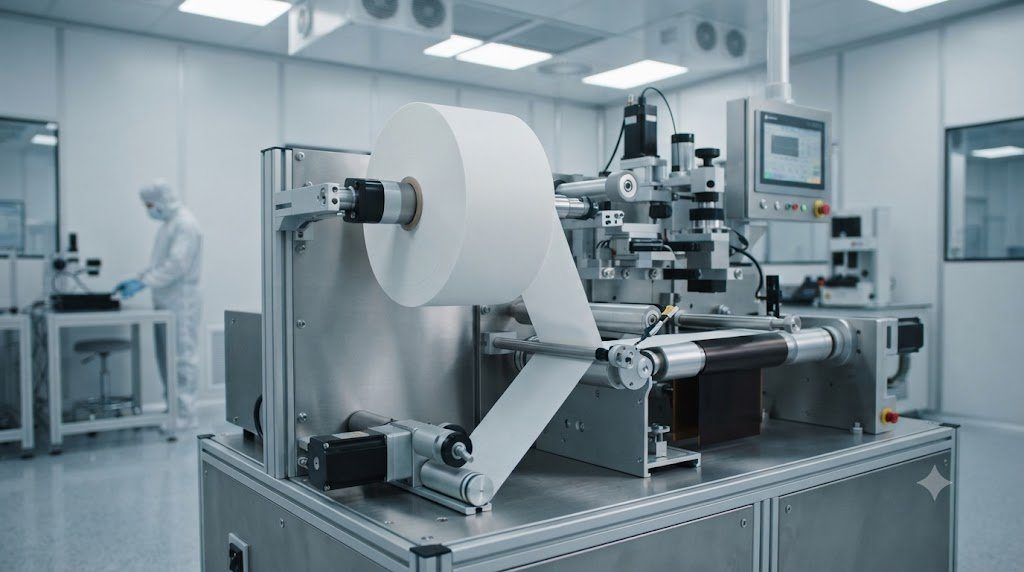
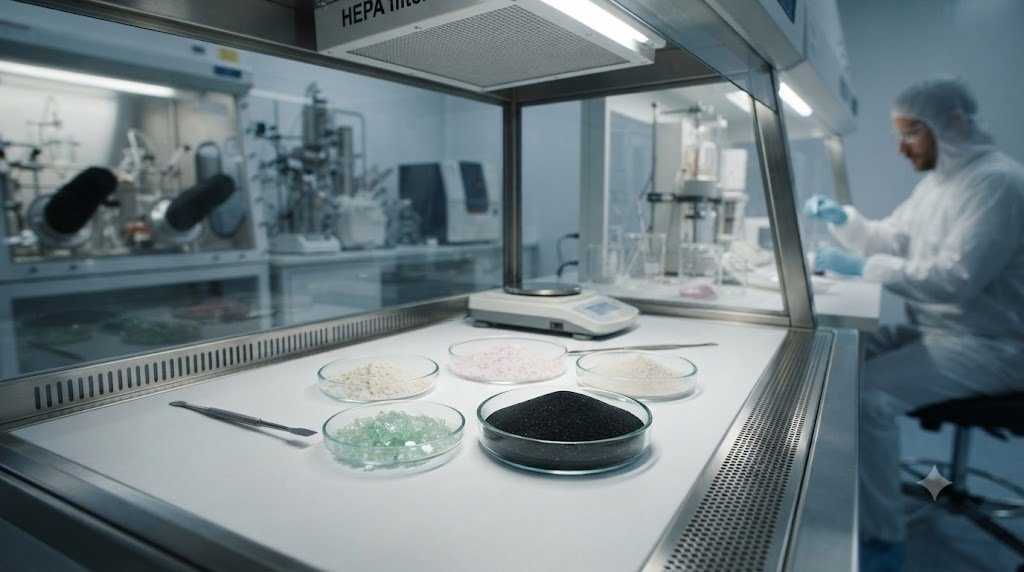
The non-aqueous liquid electrolyte is the lifeblood of a lithium-ion battery, acting as the chemical transport medium that shuttles lithium cations (Li+) between positive and negative electrodes during every charge and discharge cycle. Consisting of a precisely balanced formulation of aprotic organic carbonate solvents, conductive fluorinated lithium salts, and sacrificial functional additives, the electrolyte dictates cell operational voltage limits, fast-charging kinetics, low-temperature discharge capabilities, and thermal safety thresholds across all electrochemical cell platforms.
The Core Electrolyte Requirements
An ideal lithium battery electrolyte must satisfy severe, competing physicochemical criteria: high ionic conductivity (> 10 mS/cm at 25°C), zero electronic conductivity (< 10⁻¹² S/cm), wide electrochemical stability window (0.0V to 4.5V+ vs. Li/Li⁺), broad liquid operational range (-30°C to +60°C), non-flammability, and zero chemical corrosiveness toward aluminum and copper current collector foils.
1. Organic Carbonate Solvents: The Synergistic Cyclic and Linear Ester Balance
Because metallic lithium and lithiated graphite react violently with water, lithium-ion batteries cannot utilize aqueous electrolytes. Instead, they rely on non-aqueous aprotic organic carbonate solvents. No single organic solvent can satisfy all performance criteria; commercial electrolytes are formulated by blending cyclic carbonates with linear carbonates to achieve the optimal balance of dielectric permittivity and low viscosity:
Cyclic Carbonates: High Dielectric Permittivity
- Ethylene Carbonate (EC): Possesses a massive dielectric constant (epsilon approx 89.8 at 40°C) due to its highly polar five-membered ring structure. This immense polarity enables EC to easily dissociate lithium salt pairs into free, conducting ions. Furthermore, EC is irreplaceable because its electrochemical reduction products form the foundational passivating compounds of the Solid Electrolyte Interphase (SEI). However, pure EC has a high melting point (36°C) and is a solid at room temperature!
- Propylene Carbonate (PC): Stays liquid down to -49°C. However, on graphite anodes, un-solvated PC co-intercalates between graphene layers and exfoliates the graphite sheets apart. PC is strictly limited to low concentrations or paired with film-forming additives.
Linear Carbonates: Low Viscosity Fluidity
- Dimethyl Carbonate (DMC): Exhibits exceptionally low dynamic viscosity (approx 0.59 mPa·s at 25°C), enabling rapid ionic mobility and high power delivery. However, DMC has a low flash point (16°C), posing flammability risks.
- Ethyl Methyl Carbonate (EMC) and Diethyl Carbonate (DEC): Asymmetric linear esters that depress the freezing point of the mixture, preventing electrolyte crystallization in freezing sub-zero winter temperatures.
| Solvent Name | Molecular Formula | Dielectric Constant (ε at 25°C) | Viscosity (mPa·s at 25°C) | Melting Point (°C) | Boiling Point (°C) | Flash Point (°C) |
|---|---|---|---|---|---|---|
| Ethylene Carbonate (EC) | C3H4O3 (Cyclic) | 89.8 (at 40°C) | 1.90 (at 40°C) | +36°C (Solid at RT) | 248°C | 160°C (High safety) |
| Propylene Carbonate (PC) | C4H6O3 (Cyclic) | 64.9 | 2.53 | -49°C (Liquid) | 242°C | 132°C |
| Dimethyl Carbonate (DMC) | C3H6O3 (Linear) | 3.12 | 0.59 (Ultra-fluid) | +4.6°C | 90°C | 16°C (Flammable) |
| Ethyl Methyl Carbonate (EMC) | C4H8O3 (Linear) | 2.96 | 0.65 | -53°C (Low freeze) | 107°C | 23°C |
| Diethyl Carbonate (DEC) | C5H10O3 (Linear) | 2.81 | 0.75 | -43°C | 126°C | 31°C |
2. Lithium Electrolyte Salts: LiPF6 vs. Advanced LiFSI and LiTFSI
The electrolyte salt provides the mobile charge-carrying lithium ions, typically dissolved at concentrations between 1.0 and 1.5 moles per liter (M):
Lithium Hexafluorophosphate (LiPF6) — The Industry Workhorse
LiPF6 has dominated commercial lithium batteries for three decades because it uniquely balances high ionic conductivity (> 10 mS/cm in EC/DMC), broad electrochemical stability (> 4.3V), and critical aluminum foil passivation. During initial charging, trace fluoride decomposition products react with the positive aluminum current collector to form a thin, protective Aluminum Fluoride (AlF3) passivating layer that permanently arrests aluminum anodic dissolution.
The Achilles’ Heel of LiPF6: Thermal Instability and HF Generation
LiPF6 is in a delicate thermodynamic equilibrium with solid lithium fluoride and gaseous phosphorus pentafluoride. At temperatures above 60°C, this equilibrium shifts rightward. The released PF5 gas is a ferocious Lewis acid that reacts with trace moisture to produce corrosive hydrofluoric acid (HF):
The generated HF acid dissolves transition metals from the cathode and chemically attacks the SEI layer on the anode, triggering severe capacity fade and battery swelling.
Lithium Bis(fluorosulfonyl)imide (LiFSI) — The Fast-Charging Super-Salt
To overcome LiPF6 thermal limitations, next-generation high-rate cells incorporate LiFSI. Possessing a highly delocalized imide anion, LiFSI exhibits superior thermal stability up to 200°C, zero PF5 gas generation, and higher ionic conductivity at freezing temperatures. Historically, LiFSI corroded aluminum foil above 3.8V; however, blending 20% to 50% LiFSI with LiPF6 harnesses LiFSI’s superior conductivity while allowing LiPF6 to passivate the aluminum foil, enabling 10-minute 4C fast charging.
3. Functional Additives: SEI Formers, Flame Retardants, and Overcharge Protectors
High-performance commercial electrolytes contain up to 5 to 7 specialized sacrificial additives blended in small weight fractions (0.5% to 5% wt):
- SEI Film-Forming Additives: Vinylene Carbonate (VC) and Fluoroethylene Carbonate (FEC) reduce electrochemically before the bulk solvents, creating flexible, high-toughness polymeric and LiF-rich SEI passivation films that survive thousands of cycles.
- Cathode Protection (CEI) Additives: Lithium Difluorophosphate (LiPO2F2) and Prop-1-ene-1,3-sultone (PST) passivate high-voltage cathode surfaces, preventing catalytic transition metal dissolution up to 4.45V.
- Non-Flammable Flame Retardants: Organic organophosphates—such as Trimethyl Phosphate (TMP) or ethoxy(pentafluoro)cyclotriphosphazene (EFPN)—act as vapor-phase radical scavengers. If thermal runaway begins, they release phosphorus radicals that extinguish combustion flames.
- Redox Shuttles for Overcharge Safety: Aromatic compounds like 2,5-di-tert-butyl-1,4-dimethoxybenzene oxidize reversibly at 4.5V, shuttling charge harmlessly between cathode and anode to clamp cell voltage and prevent overcharge fires.
4. Localized High-Concentration Electrolytes (LHCE)
In standard dilute electrolytes (1.0M), free, un-coordinated solvent molecules exist in abundance, readily decomposing on metallic lithium anodes. To enable pure lithium metal and high-voltage silicon batteries, researchers developed Localized High-Concentration Electrolytes (LHCE):
By dissolving super-salts (LiFSI) at extreme molar ratios (> 4M to 5M) and blending with an electrochemically inert fluorinated non-solvent diluent (such as bis(2,2,2-trifluoroethyl) ether – BTFE), every solvent molecule is bound tightly into a lithium cation solvation sheath. With zero free solvent molecules available to react parasiticly, LHCE electrolytes achieve near 99.9% Coulombic efficiency on pure metallic lithium anodes while maintaining the low viscosity required for commercial cell operation.
5. Low-Temperature Kinetics and Carboxylate Co-Solvents
Standard commercial lithium-ion batteries suffer massive performance loss when operated in sub-zero winter environments (-20°C to -40°C). Conventional ethylene carbonate electrolytes undergo drastic viscosity spikes, and lithium salt ion pairs re-associate, causing bulk electrolyte conductivity to plummet by over 80%:
- Low-Viscosity Carboxylate Esters: To formulate arctic-grade automotive electrolytes, chemical engineers replace linear carbonates with ultra-low-viscosity aliphatic carboxylic esters, specifically Methyl Propionate (MP), Ethyl Propionate (EP), and Methyl Acetate (MA). Methyl acetate possesses a dynamic viscosity of only 0.36 mPa·s and a freezing point below -98°C. Incorporating 20% to 40% MA into carbonate mixtures preserves high lithium ion mobility down to -40°C, delivering over 70% nominal room-temperature capacity.
- Desolvation Activation Energy Barriers: At freezing temperatures, the dominant rate-limiting bottleneck during charging is not bulk diffusion, but the energy required to strip the solvent coordination shell from the lithium cation (desolvation) before it can enter the anode lattice. Fluorinated solvents lower the coordination binding energy between Li+ cations and solvent oxygen atoms, cutting desolvation activation energy from 60 kJ/mol down to 30 kJ/mol and mitigating low-temperature metallic lithium dendrite plating.
6. High-Voltage Electrolyte Decomposition and CEI Dynamics
Pushing lithium battery energy density beyond 300 Wh/kg requires operating cathode cut-off voltages to 4.40V, 4.45V, and 4.50V vs. Li/Li⁺. However, standard linear carbonate solvents possess Highest Occupied Molecular Orbital (HOMO) energy levels around 4.3V:
- Oxidative Dehydrogenation on Nickel Facets: At potentials above 4.3V, highly catalytic Ni4+ facets on high-nickel cathodes extract electrons from solvent molecules, initiating free-radical decomposition chains that generate acidic species, carbon dioxide gas, and high-impedance resistive surface films.
- Fluorinated Solvents and Nitrile Additives: Introducing strongly electronegative fluorine atoms into carbonate molecules (such as Fluoroethylene Carbonate – FEC or bis(2,2,2-trifluoroethyl) carbonate – TFEC) lowers the solvent HOMO energy level, expanding the oxidative stability limit well beyond 4.80V. Simultaneously, trace dinitrile additives—such as Adiponitrile (ADN) and Succinonitrile (SN)—chemically coordinate with active surface nickel ions, forming a protective passivation shield (Cathode Electrolyte Interphase – CEI) that arrests ongoing electrolyte oxidation.
7. Industrial Electrolyte Filling, Wetting, and Vacuum Soak Cycles
In battery manufacturing, the electrolyte filling and wetting stage is a delicate, rate-limiting manufacturing operation that directly governs cell quality and initial reject rates:
- Multi-Stage Vacuum Injection: Because modern high-energy-density electrodes are calendered to high compaction densities with minute tortuous pores, liquid electrolyte cannot penetrate the roll under atmospheric pressure alone. Automated filling machines place the cell under deep vacuum (< -0.095 MPa) before injecting precisely measured electrolyte volumes with micro-gram accuracy. Pulsed vacuum-to-positive-pressure cycles force the fluid deep into the microscopic pore capillaries.
- Elevated Temperature Soaking (Aging): Following sealing, cells undergo a 24-to-48-hour high-temperature soaking period at 40°C to 45°C. The elevated thermal energy lowers electrolyte viscosity and accelerates capillary action, ensuring that 100% of the active material surface and internal separator pores are completely wetted prior to initial formation charging. Incomplete wetting leaves dry un-contacted electrode islands that suffer localized overcharge and rapid dendrite shorts.
8. Electrolyte Decomposition in Thermal Runaway
During thermal runaway, the liquid electrolyte is the primary combustible fuel that feeds the fire:
At temperatures between 150°C and 200°C, organic carbonates undergo violent transesterification and thermal combustion with oxygen released from the cathode, producing immense volumes of toxic and flammable gases including carbon monoxide (CO), hydrogen (H2), methane (CH4), ethylene (C2H4), and deadly fluoro-organics. Simultaneously, LiPF6 salt breaks down completely, releasing dense white clouds of toxic hydrofluoric acid (HF) vapor that pose severe inhalation hazards, mandating specialized hazmat breathing gear for electric vehicle emergency first responders.
9. Ionic Liquids and Non-Volatile Safety Formulations
To eliminate electrolyte flammability entirely, advanced research teams are deploying Room Temperature Ionic Liquids (RTILs):
- Chemical Composition: RTILs consist entirely of bulky organic cations (such as 1-butyl-1-methylpyrrolidinium – [Pyr14]+ or imidazolium derivatives) paired with weakly coordinating fluorinated anions like [TFSI]-. Because they are 100% ionic salts with zero volatile molecular solvents, ionic liquids exhibit virtually zero vapor pressure and will not ignite or burn even when exposed directly to open flames at 300°C.
- Commercial Trade-offs: Ionic liquids possess higher viscosities (30 to 80 mPa·s at room temperature), which curtails fast-charging power capability at freezing temperatures. Consequently, hybrid systems blending 10% to 20% ionic liquid with fluorinated carbonates are currently commercializing in aerospace and underground mining battery packs.
10. Frequently Asked Questions Regarding Battery Electrolytes
Why can’t lithium-ion batteries use water-based electrolytes?
Metallic lithium and lithiated graphite react violently with water to produce flammable hydrogen gas and destroy the battery; therefore, non-aqueous organic solvents are required.
What is the most common lithium salt used in battery electrolytes?
Lithium Hexafluorophosphate (LiPF6) is used in over 90% of commercial cells due to its balanced conductivity, solubility, and ability to passivate aluminum foil.
Why is Ethylene Carbonate (EC) mixed with linear carbonates like DMC?
EC has a high dielectric constant that dissolves lithium salts but is a solid at room temperature; linear carbonates like DMC thin the liquid to ensure fast ion movement.
What causes hydrofluoric acid (HF) to form inside a battery?
At temperatures above 60°C or in the presence of trace moisture, LiPF6 decomposes into PF5 gas, which reacts with water to form highly corrosive hydrofluoric acid (HF).
What is LiFSI and why is it replacing LiPF6 in fast-charging cells?
LiFSI offers higher ionic conductivity, superior low-temperature performance, and better thermal stability up to 200°C without generating toxic PF5 gas.
What is Vinylene Carbonate (VC) and what is its role?
VC is a sacrificial additive that decomposes first during formation charging, creating a tough, elastic polymer layer that protects the anode from continuous degradation.
What are flame-retardant additives in electrolytes?
Organophosphates like TMP that release phosphorus radicals during overheating, chemically quenching combustion flames and suppressing thermal runaway fires.
What is a Localized High-Concentration Electrolyte (LHCE)?
An electrolyte where salt and solvent are mixed at ultra-high concentrations and thinned with an inert fluorinated diluent, binding all solvent molecules to enable metallic lithium anodes.
What is the typical ionic conductivity of a lithium battery electrolyte?
Around 10 to 12 mS/cm at 25°C, dropping to around 2 to 3 mS/cm at -20°C.
Why do battery electrolyte fumes smell sweet but pose extreme hazards?
Organic carbonate solvents have a sweet, fruity odor, but burning electrolytes release invisible, lethal hydrofluoric acid (HF) and carbon monoxide gases.
What role do carboxylate esters play in cold climates?
Esters like methyl acetate remain fluid down to -98°C, lowering viscosity and enabling reliable battery operation at -40°C in arctic weather.
Why are vacuum wetting cycles mandatory during battery manufacturing?
High electrode compaction creates microscopic pores that liquid electrolyte cannot enter under ambient pressure; vacuum pulses force complete fluid wetting.