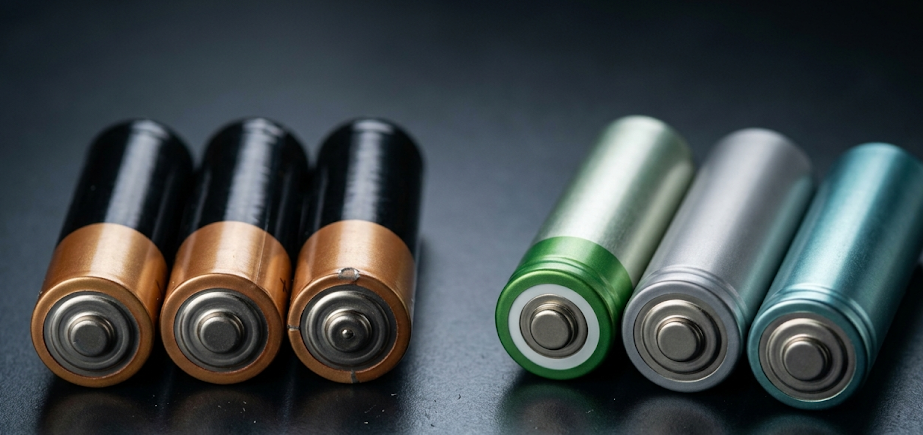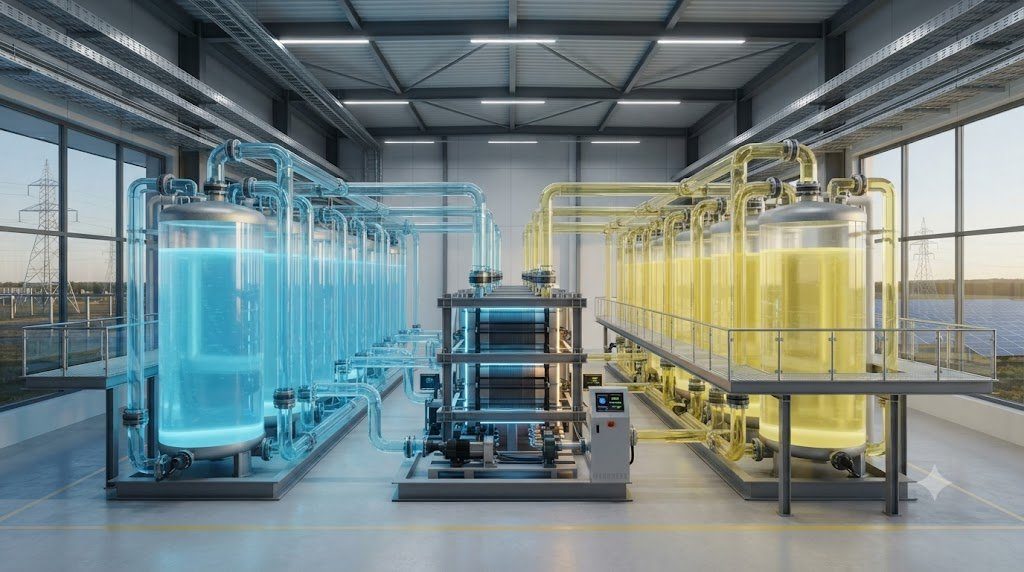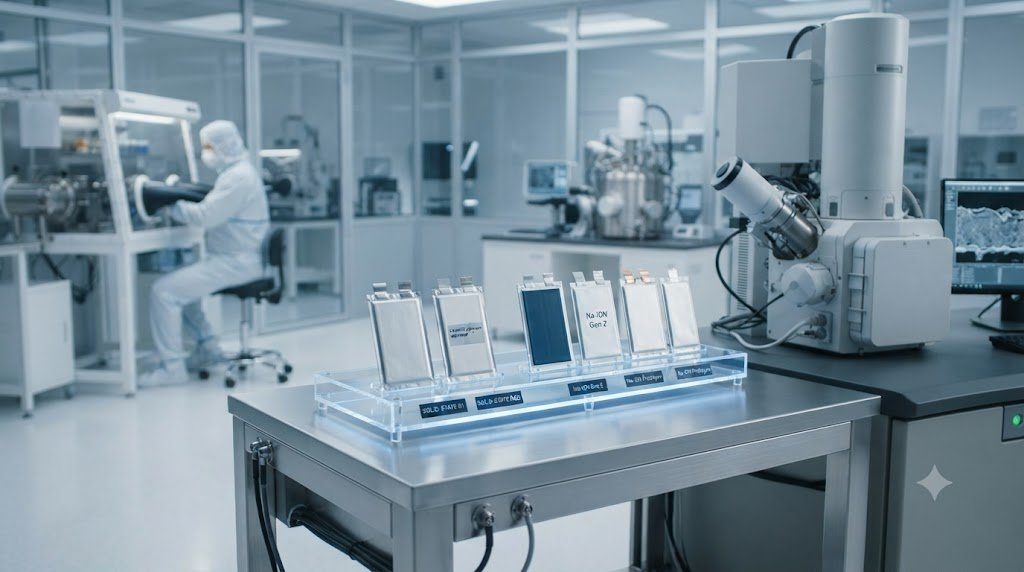
Next-generation battery chemistries—spanning sodium-ion ($Na$-ion), solid-state electrolytes, lithium-sulfur ($Li$-$S$), and multivalent metal-air systems—are poised to radically transform the landscape of mobile mobility and stationary energy storage. Driven by the urgent imperatives of mineral supply-chain sovereignty (bypassing scarce lithium, cobalt, and nickel deposits), dramatic safety enhancements through solid-state thermal runaway immunity, and theoretical energy density ceilings exceeding 500 Wh/kg, understanding the atomic transport mechanics, interfacial degradation kinetics, and industrialization roadmaps of these emerging paradigms is essential for modern battery engineers.
The Driving Catalyst for Next-Gen Chemistries
The global energy storage transition faces severe supply-chain concentration risks in lithium carbonate/hydroxide refining, cobalt geopolitical constraints, and the flammability hazards of volatile liquid organic carbonates. Next-generation chemistries seek either abundant earth minerals (Sodium, Sulfur) or non-flammable solid-state ceramic/polymer separators to achieve sustainable gigawatt-scale manufacturing.
1. Sodium-Ion Batteries (Na-ion): Abundance, Cathodes, and Hard Carbon Anodes
Sodium-ion technology has made the dramatic leap from academic laboratories to commercial gigafactory production lines (spearheaded by CATL, HiNa Battery, and Faradion). Sodium sits directly beneath lithium in Group 1 of the periodic table, sharing identical monovalent ($+1$) valence chemistry. However, sodium raw materials (derived from ubiquitous rock salt and soda ash) are over 300 times more abundant and drastically cheaper than lithium resources.
The Physics of Larger Ionic Radii
The fundamental challenge of sodium-ion systems stems from atomic dimensions: the ionic radius of $Na^+$ (1.02 Å) is substantially larger than that of $Li^+$ (0.76 Å). This larger ionic radius prevents sodium from intercalating efficiently into standard synthetic graphite lattices, which are thermodynamically unfavorable for stable $NaC_6$ staging compounds.
To overcome this, sodium-ion batteries utilize Hard Carbon (non-graphitizable carbon) anodes derived from biomass precursors (sucrose, lignin, coconut shells). Hard carbon features expanded interlayer spacing ($d_{002} > 0.37$ nm) combined with nanoporous ‘falling cards’ structures that accommodate sodium storage via a two-stage adsorption-insertion or slope-plateau mechanism.
Sodium Cathode Families: Prussian White vs. Transition Metal Oxides
- Layered Transition Metal Oxides ($Na_xMO_2$): Utilizing O3 or P2 phase structures (e.g., $NaFe_{0.5}Mn_{0.5}O_2$), these offer high volumetric energy density (150–165 Wh/kg) and seamless manufacturing compatibility with existing lithium-ion coating equipment.
- Prussian Blue Analogues (PBAs / Prussian White): Open metal-organic frameworks featuring cyanide bridges, such as $Na_{2-x}Fe[Fe(CN)_6]$. PBAs offer ultra-fast ionic diffusion channels (enabling 10-minute fast charging) and zero reliance on expensive metals, but require strict moisture elimination during slurry processing.
- Polyanionic Compounds (NFPP): Sodium iron fluorophosphates ($Na_4Fe_3(PO_4)_2(P_2O_7)$) boasting rock-solid structural stability, zero oxygen release at elevated temperatures, and cycle lives exceeding 6,000 cycles.
2. Solid-State Batteries (SSBs): Solid Electrolytes and Dendrite Physics
Solid-state batteries represent the ‘holy grail’ of battery safety and energy density. By replacing volatile, flammable liquid organic carbonate solvents with a non-flammable solid electrolyte separator, solid-state cells eliminate the threat of catastrophic fires while enabling the use of pure metallic lithium anodes (3,860 mAh/g specific capacity vs. 372 mAh/g for graphite), pushing pack-level energy densities beyond 450 to 500 Wh/kg.
Solid Electrolyte Material Classes
- Oxide Solid Electrolytes (LLZO / NASICON): Garnet-type lithium lanthanum zirconium oxide ($Li_7La_3Zr_2O_{12}$, LLZO) offers exceptional chemical stability against metallic lithium and wide electrochemical stability windows ($> 4.5V$). However, oxides are brittle ceramics that require high-temperature sintering and suffer from high interfacial contact resistance against solid electrodes.
- Sulfide Solid Electrolytes (LPS / Argyrodites): Sulfide glasses ($Li_6PS_5Cl$) feature astonishing ionic conductivities exceeding $10^{-2}$ S/cm at room temperature—matching liquid electrolytes! Sulfides are mechanically soft and easily cold-pressed into dense pellets. Their critical limitation is extreme moisture reactivity: exposure to ambient humidity generates lethal, toxic hydrogen sulfide ($H_2S$) gas, demanding ultra-dry room manufacturing environments.
- Solid Polymer Electrolytes (PEO): Polyethylene oxide complexed with lithium salts (LiTFSI). While cheap, flexible, and easy to roll-to-roll process, PEO polymers require high operating temperatures (60°C to 80°C) to melt crystalline domains and achieve sufficient ionic conductivity.
3. Lithium-Sulfur Batteries (Li-S): High Specific Energy and Polysulfide Shuttling
Lithium-Sulfur chemistry boasts an astronomical theoretical energy density of 2,600 Wh/kg (1,675 mAh/g), dwarfing conventional intercalation lithium-ion systems. The cathode relies on cheap, abundant elemental sulfur ($S_8$) that reacts with metallic lithium via a multi-electron conversion reaction ($16Li + S_8 o 8Li_2S$).
The Polysulfide Shuttling Problem
Despite decades of development, commercial Li-S deployment has been hindered by three severe chemical bottlenecks:
- The Polysulfide Shuttle Effect: Intermediate lithium polysulfides ($Li_2S_8$, $Li_2S_6$, $Li_2S_4$) dissolve readily into liquid ether electrolytes, diffusing across the separator to react parasiticly with the lithium anode. This shuttle loop causes rapid irreversible active material loss, severe self-discharge, and rapid capacity fade.
- 80% Volumetric Expansion: The conversion of elemental sulfur ($S_8$) to lithium sulfide ($Li_2S$) incurs an enormous volumetric expansion of nearly 80%, mechanically pulverizing conductive carbon host scaffolds over repeated cycles.
- Insulating Nature: Both elemental sulfur and the final discharge product ($Li_2S$) are electronic and ionic insulators, requiring massive amounts of inactive conductive carbon additives that degrade volumetric energy density.
4. Metal-Air Batteries: Lithium-Air and Zinc-Air Systems
Metal-air batteries are open electrochemical systems that extract oxygen ($O_2$) directly from ambient atmospheric air to serve as the positive cathode reactant, drastically reducing battery weight. Lithium-air ($Li ext{-}O_2$) systems boast theoretical specific energies of approximately 3,500 Wh/kg—approaching gasoline.
However, lithium-air cells face monumental engineering obstacles: atmospheric moisture ($H_2O$) and carbon dioxide ($CO_2$) enter through the gas-diffusion cathode, forming insoluble lithium carbonate ($Li_2CO_3$) and corrosive lithium hydroxide that permanently poison the battery. In contrast, Zinc-Air (Zn-air) operates reliably in aqueous alkaline electrolytes and is universally utilized in miniature hearing aids; however, developing electrically rechargeable zinc-air systems with long cycle life remains constrained by zinc dendrite formation and carbon corrosion during high-voltage oxygen evolution charging.
| Chemistry | Theoretical Specific Energy | Practical Pack Energy Density | Key Raw Material Advantages | Primary Technical Hurdle | Commercialization Status |
|---|---|---|---|---|---|
| Sodium-Ion (Na-ion) | 300 – 400 Wh/kg | 140 – 165 Wh/kg | Zero lithium, zero cobalt, abundant sodium salts | Lower energy density than NMC; hard carbon cost | Commercial production (EVs, 2-wheelers, stationary BESS) |
| All-Solid-State (SSB) | 700 – 900 Wh/kg | 400 – 500 Wh/kg | Non-flammable solid electrolyte; metallic lithium anode | Solid-solid interfacial resistance; dendrite short circuits | Pilot manufacturing (Early EV fleet trials 2026-2028) |
| Lithium-Sulfur (Li-S) | 2,600 Wh/kg | 350 – 450 Wh/kg | Low-cost elemental sulfur; lightweight | Polysulfide shuttling; 80% volume expansion; cycle life | Specialized niche (High-altitude aerospace, military drones) |
| Rechargeable Zinc-Air | 1,086 Wh/kg | 100 – 180 Wh/kg | Earth-abundant non-toxic zinc; ambient oxygen cathode | Air purification required; slow recharge kinetics; dendrites | Stationary pilot microgrids (Primary disposable widespread) |
5. Aluminum-Ion and Magnesium-Ion: Multivalent Charge Carriers
While lithium and sodium are monovalent cations carrying a single positive charge ($+1$), multivalent systems utilize divalent or trivalent ions—such as Magnesium ($Mg^{2+}$) or Aluminum ($Al^{3+}$). A single multivalent ion transfers two or three electrons per ion intercalated, theoretically delivering massive volumetric charge capacities without requiring dangerous alkali metal handling.
The scientific bottleneck of multivalent ions is high charge density: because $Mg^{2+}$ and $Al^{3+}$ carry multiple charges on a small atomic radius, their electrostatic attraction to surrounding anions in host crystal lattices is intensely strong. Ions become electrostatically “trapped” within cathode frameworks, leading to sluggish diffusion kinetics and limited room-temperature power delivery.
6. Industrial Manufacturing Synergy: Retrofitting Lithium Gigafactories for Sodium-Ion
One of the most profound commercial advantages of sodium-ion battery technology over radical departures like solid-state or metal-air is its virtually seamless drop-in manufacturing compatibility with existing lithium-ion gigafactory capital infrastructure:
- Identical Roll-to-Roll Machinery: Slurry mixing, slot-die precision coating, continuous roll drying, calendering compaction, and automated electrode slitting machinery designed for NMC and LFP can be utilized for layered oxide or Prussian blue sodium-ion cells with minor viscosity adjustments.
- Elimination of Expensive Copper Foil: In lithium-ion cells, the negative anode must use expensive copper foil ($Cu$) current collectors because metallic lithium alloys aggressively with aluminum at low potentials. In sodium-ion cells, sodium does not form low-potential alloys with aluminum. Consequently, battery manufacturers replace heavy, expensive copper foil on the anode with ultra-light, low-cost aluminum foil ($Al$) on both cathode and anode. This reduces cell material costs by 8% to 12% and saves considerable weight.
- Zero-Volt Safe Transport and Storage: Lithium-ion cells cannot be discharged below 2.0V without dissolving copper current collectors into toxic copper dendrites that cause catastrophic internal shorts upon recharge. Sodium-ion cells with aluminum current collectors can be discharged completely to 0.00 volts and short-circuited across their terminals for air freight and ocean container shipping, rendering them totally immune to fire hazards during transit.
7. Mechanical Stack Pressure Engineering in All-Solid-State Cells
A major engineering challenge that must be solved before all-solid-state batteries enter commercial high-volume passenger vehicles is mechanical stack pressure management:
Unlike liquid electrolytes that effortlessly flow into micro-voids during expansion and contraction, solid-solid interfaces cannot deform plastically. When metallic lithium strips away from the anode during discharge, microscopic interfacial voids (delamination gaps) form between the solid electrolyte and the current collector. These voids concentrate current density at remaining contact points, triggering violent lithium dendrite growth through ceramic grain boundaries that short-circuit the cell. To prevent void formation, solid-state battery modules must integrate heavy internal mechanical spring fixtures or pneumatic clamps that maintain continuous, uniform external stack pressures between 1 and 5 Megapascals (MPa) (10 to 50 atmospheres) across hundreds of thousands of road vibration cycles.
8. Pure Silicon Anode Solid-State Architectures
While pure metallic lithium anodes offer maximum theoretical capacity, their propensity to grow dendrites through solid electrolyte grain boundaries has prompted leading solid-state innovators (such as Solid Power and QuantumScape) to develop all-solid-state micro-silicon anodes:
- High Theoretical Capacity Without Lithium Foil: Elemental silicon ($Si$) alloys electrochemically with lithium to form $Li_{15}Si_4$, delivering a massive specific capacity of approximately 3,579 mAh/g (ten times higher than conventional graphite).
- Mechanical Stress Mitigation via Sulfide Electrolytes: In conventional liquid cells, silicon particles undergo 300% volumetric expansion, pulverizing liquid solid-electrolyte interphase (SEI) layers. In all-solid-state sulfide configurations, the ductile sulfide electrolyte deforms elastically with the expanding silicon grains while remaining devoid of continuous liquid decomposition side reactions, enabling stable cycling over 1,000+ deep charge cycles.
9. Frequently Asked Questions Regarding Emerging Battery Chemistries
Why are sodium-ion batteries cheaper than lithium-ion?
Sodium raw materials are derived from abundant rock salt, costing a fraction of lithium. Additionally, sodium batteries use cheap aluminum current collectors on both anode and cathode, whereas lithium requires expensive copper foil on the anode.
Can sodium-ion batteries be discharged to 0.0 volts for shipping?
Yes! Because sodium does not alloy with aluminum at zero volts, sodium-ion batteries can be shipped completely discharged at 0V with zero thermal runaway or degradation risk, drastically reducing transport hazards.
What is the primary safety advantage of all-solid-state batteries?
They eliminate flammable liquid organic electrolytes. Solid ceramic or sulfide separators cannot leak, boil, or catch fire, preventing catastrophic thermal runaway even if punctured.
What causes the ‘polysulfide shuttle’ in lithium-sulfur batteries?
Intermediate lithium polysulfides dissolve into the liquid electrolyte and diffuse between cathode and anode, causing parasitic reactions that permanently reduce active sulfur capacity.
Why can’t standard graphite be used in sodium-ion battery anodes?
The larger sodium ion cannot insert thermodynamically into graphite layers. Sodium-ion cells use non-graphitizable ‘hard carbon’ with wider interlayer spaces and nanopores.
What is the difference between oxide and sulfide solid electrolytes?
Oxides (like LLZO) are ceramic, mechanically rigid, and non-reactive, but brittle with high contact resistance. Sulfides (like LPS) are soft with ultra-high conductivity, but generate toxic H2S gas if exposed to air moisture.
How do metal-air batteries generate electricity?
Metal-air batteries use oxygen from ambient air as the cathode reactant, drastically cutting battery weight because the positive active material is not stored inside the battery casing.
What is a multivalent battery?
A multivalent battery uses ions that carry multiple electrical charges (like Mg2+ or Al3+), transferring two or three electrons per ion to theoretically achieve higher volumetric capacity.
Will sodium-ion replace lithium-ion in high-performance sports electric cars?
No. Sodium-ion has lower energy density (140-165 Wh/kg) than NMC lithium-ion (250-300 Wh/kg), making it ideal for entry-level city cars, 2-wheelers, and grid energy storage rather than long-range luxury EVs.
When will solid-state batteries be mass-produced in electric vehicles?
Pilot production and premium luxury EV deployments are beginning in the 2026-2028 timeframe, with widespread mass-market automotive adoption anticipated after 2030 as manufacturing costs decrease.