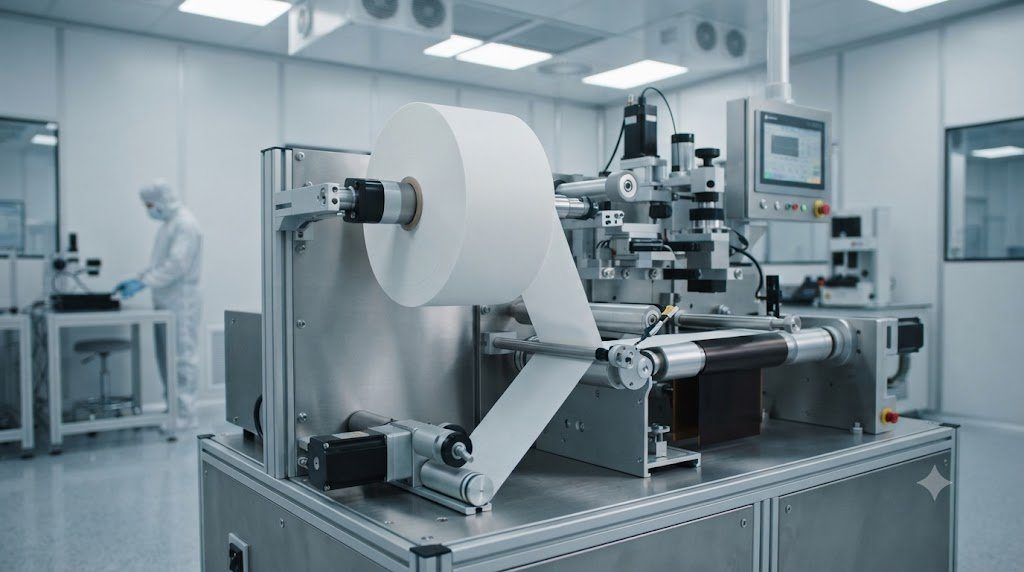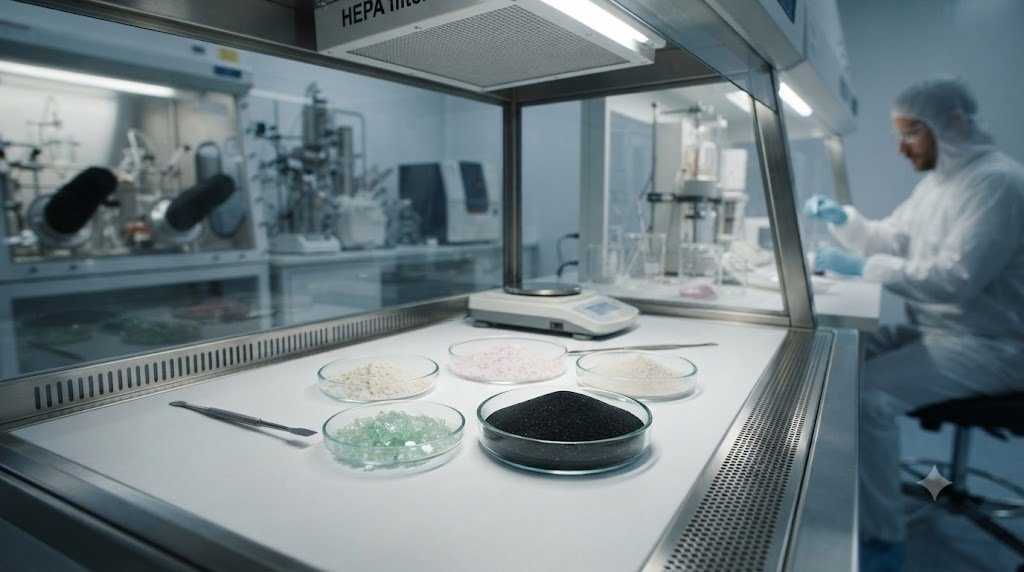
The positive electrode (cathode) is the single most expensive, energy-limiting, and chemically complex component of any lithium-based battery cell, accounting for over 35% to 45% of total cell manufacturing cost. From solid-state precursors and continuous co-precipitation kinetics to single-crystal thermal calcination and dry electrode coating innovations, the physical architecture and tap density of cathode active materials dictate operating voltage, rate capability, cycle life, and thermal runaway thresholds across all rechargeable lithium platforms.
The Cathode Energy Bottleneck
In any electrochemical battery, the cathode governs specific energy. While modern graphite and silicon anodes achieve capacities between 350 and 1,000+ mAh/g, commercial cathodes operate between only 160 mAh/g (LFP) and 215 mAh/g (high-Ni NMC). Consequently, over 60% of internal cell mass consists of cathode active material.
1. Industrial Synthesis: Hydroxide Co-Precipitation vs. Solid-State Calcination
The manufacturing of modern cathode active materials (CAM) proceeds through two fundamentally distinct industrial pathways:
Continuous Co-Precipitation Synthesis (Ternary Oxides: NMC / NCA)
Ternary layered cathodes require atomic-level homogeneous mixing of nickel, cobalt, and manganese ions that cannot be achieved via simple mechanical powder grinding. Manufacturing begins with chemical co-precipitation in high-precision Continuous Stirred-Tank Reactors (CSTR) or Taylor-Couette vortex reactors:
- Aqueous metal sulfate solutions (NiSO4, CoSO4, MnSO4) are pumped into the reactor under an inert nitrogen (N2) blanket to prevent premature oxidation of Mn2+ ions.
- Sodium hydroxide (NaOH) feeds continuously to maintain pH within a strict window of 10.8 to 11.4 (accurate to ±0.05 pH units), while ammonium hydroxide (NH4OH) acts as a chelating complexing agent.
- Over a residence time of 15 to 30 hours, secondary spherical particles grow through controlled nucleation and agglomeration, yielding dense, uniform precursor hydroxide spheres with narrow particle size distributions (D50 approx 10 microns).
Solid-State Hydrothermal Calcination (LFP / Polyanions)
In contrast, Lithium Iron Phosphate (LiFePO4) is typically synthesized via high-energy wet bead milling of lithium carbonate/hydroxide (Li2CO3), iron(II) oxalate or iron(III) phosphate, and diammonium phosphate. The milled nanoparticle slurry is blended with carbon precursors (glucose, sucrose, organic resins), spray-dried into micro-granules, and fired in rotary kilns at 650°C to 750°C under a reducing atmosphere (N2/H2). The organic precursor pyrolyzes into a continuous, nanometer-thin conductive carbon shell encapsulating every LFP primary crystal.
2. Tap Density and Volumetric Energy Density Optimization
While gravimetric specific energy (Wh/kg) determines how heavy a battery is, volumetric energy density (Wh/L) determines how much physical space the battery occupies inside an electric car chassis or consumer smartphone. Volumetric energy density is strictly dictated by cathode tap density and electrode calendering compaction:
| Cathode Active Material | True Crystal Density (g/cm³) | Powder Tap Density (g/cm³) | Calendered Electrode Density (g/cm³) | Volumetric Capacity (mAh/cm³) |
|---|---|---|---|---|
| LFP (Carbon-coated) | 3.60 g/cm³ | 1.1 – 1.4 g/cm³ | 2.2 – 2.5 g/cm³ | ~350 – 400 mAh/cm³ |
| LMFP (Manganese-doped) | 3.75 g/cm³ | 1.3 – 1.6 g/cm³ | 2.4 – 2.7 g/cm³ | ~420 – 480 mAh/cm³ |
| Polycrystalline NMC 811 | 4.80 g/cm³ | 2.2 – 2.5 g/cm³ | 3.3 – 3.5 g/cm³ | ~680 – 740 mAh/cm³ |
| Single-Crystal NMC 811 | 4.85 g/cm³ | 2.4 – 2.7 g/cm³ | 3.5 – 3.7 g/cm³ | ~720 – 780 mAh/cm³ |
| LCO (Lithium Cobalt Oxide) | 5.05 g/cm³ | 2.8 – 3.1 g/cm³ | 3.9 – 4.2 g/cm³ | ~800 – 850 mAh/cm³ |
To maximize packing efficiency, modern cathode manufacturers employ bimodal particle size distributions, blending large 10-to-12-micron secondary particles with small 3-to-5-micron particles. The smaller spheres nest within the interstitial voids between larger spheres, raising calendered electrode density above 3.5 g/cm³ without crushing particles or restricting electrolyte wettability.
3. Single-Crystal vs. Polycrystalline Cathode Architecture
One of the most consequential advancements in modern ternary cathode engineering is the industry-wide transition from polycrystalline to single-crystal particle morphologies:
- The Failure of Polycrystalline ‘Meatball’ Structures: Standard polycrystalline NMC particles consist of thousands of tiny, randomly oriented 100-to-200-nanometer crystallites fused together into spherical agglomerates. When subjected to repetitive anisotropic lattice expansion during deep cycling, stress concentrations at internal grain boundaries cause particles to shatter like glass. Liquid electrolyte penetrates these internal fractures, triggering severe transition metal leaching, impedance rise, and premature capacity fade.
- Single-Crystal Monoliths: Synthesized by calcining precursor hydroxides with excess flux agents at higher temperatures (850°C to 950°C), single-crystal NMC particles are grown as monolithic, individual polyhedral crystals measuring 2 to 5 microns across. With zero internal grain boundaries, single crystals tolerate immense calendering pressures without fracturing, eliminate particle pulverization, and extend high-voltage calendar life by over 300%.
4. High-Voltage Surface Coatings and Atomic Layer Deposition (ALD)
When high-nickel ternary cathodes operate at voltages exceeding 4.20V vs. Li/Li⁺, highly oxidized surface transition metals—particularly tetravalent nickel (Ni4+)—act as ferocious catalysts that rip electrons from carbonate solvent molecules, triggering oxidative electrolyte decomposition, oxygen gas evolution, and resistive rock-salt phase formation. To suppress this degradation, chemical engineers coat cathode particles with nanoscale protective barriers:
- Inorganic Oxide Coatings (Al2O3, TiO2, ZrO2): Conformal metal oxide nano-films (1 to 3 nanometers thick) applied via Atomic Layer Deposition (ALD) or wet chemical sol-gel processing physically isolate catalytic Ni4+ sites from liquid solvent. Furthermore, basic metal oxides act as chemical sponges, reacting with and neutralizing trace hydrofluoric acid (HF) to prevent cathode dissolution.
- Fast-Ion Conducting Phosphate Shells (Li3PO4): Lithium phosphate coatings combine mechanical protection with rapid lithium ion transport, maintaining low charge-transfer resistance while operating up to 4.40V cut-off potentials.
5. Dry Battery Electrode (DBE) Coating Innovations
In traditional cathode manufacturing, cathode active powder, conductive carbon, and PVDF binder are mixed into toxic NMP liquid solvent to form a slurry, coated onto aluminum foil, and passed through massive, energy-guzzling drying ovens hundreds of meters long. This wet process consumes enormous electrical energy and requires expensive solvent recovery systems.
Pioneered commercially by Maxwell Technologies and Tesla for the 4680 cell format, Dry Battery Electrode (DBE) technology completely eliminates liquid solvents. Polytetrafluoroethylene (PTFE) binder powder is blended dry with cathode active material. High-shear air-jet milling fibrillates the PTFE into a spiderweb of nanoscale polymer fibers, transforming dry powder into a free-standing, cohesive cathode film. This dry film is directly laminated onto aluminum current collector foil via high-pressure heated calendering rollers, slashing factory footprint by 70%, reducing manufacturing energy consumption by 50%, and enabling thicker, higher-capacity electrodes without solvent migration cracks.
6. Aluminum Foil Current Collector Passivation and Carbon Priming
The positive cathode relies exclusively on high-purity aluminum foil (typically 12 to 15 microns thick) as its electrical current collector. Aluminum is chosen because it forms a natural, passivating surface oxide layer (Al2O3) that prevents anodic corrosion up to ~3.8V. In high-performance cells, aluminum foils receive an additional ultra-thin (1 micron) conductive carbon primer coating before CAM slurry application. This carbon primer slashes contact resistance by 40%, prevents electrode delamination under fast discharge, and shields the aluminum substrate from localized pitting corrosion driven by trace chloride and fluoride impurities.
7. Industrial Slurry Rheology: Planetary Mixing and Viscosity Windows
Translating dry cathode active materials into ultra-uniform, defect-free electrode coatings requires mastery over non-Newtonian slurry rheology and high-shear dispersion:
- Dual-Planetary Vacuum Dispersers: Cathode active powders, conductive carbon black, carbon nanotubes (CNTs), and polyvinylidene fluoride (PVDF) binder dissolved in NMP solvent are mixed under vacuum (< -0.09 MPa). Vacuum mixing eliminates air micro-bubbles that cause pinholes and blister defects during high-speed slot-die coating.
- Shear-Thinning Pseudoplasticity: Cathode slurries must exhibit strong shear-thinning behavior: dynamic viscosity must drop dramatically under high shear rates inside the slot-die coating nozzle (allowing smooth, mirror-like liquid leveling across moving aluminum foil at 50 to 80 meters per minute), then instantly recover high viscosity upon exiting the die to prevent slurry sagging or edge dripping before entering drying ovens.
8. High-Temperature Sintering and Kiln Atmosphere Control
The final crystal quality, cation ordering, and electrochemical capacity of ternary cathodes are forged inside massive multi-atmosphere roller hearth kilns (RHK) stretching over 60 meters in length:
Precursor hydroxide powders blended with lithium hydroxide (LiOH) pass through precise multi-stage temperature zones (450°C pre-heating, 750°C to 850°C sintering, and controlled cooling). Because nickel is thermodynamically prone to reducing from Ni3+ to inactive Ni2+ at high temperatures, the kiln chamber is flooded with pure oxygen (> 99.5% O2) gas at positive pressure. Maintaining oxygen-rich atmospheres forces nickel cations to remain in their electrochemically active trivalent state, suppressing Li+/Ni2+ cation mixing disorder and delivering peak specific capacities above 210 mAh/g.
9. Residual Lithium Surface Chemistry: Carbonate and Hydroxide Passivation
High-nickel ternary cathodes (such as NMC 811 and NCA) suffer from a critical surface degradation phenomenon known as residual surface lithium compounds. During high-temperature calcination and ambient cooling, unreacted lithium ions diffuse to the crystal facets and react spontaneously with atmospheric moisture (H2O) and carbon dioxide (CO2):
- Chemical Formation Mechanisms: Surface lithium oxide reacts with water vapor to form Lithium Hydroxide (LiOH), which subsequently captures carbon dioxide to form Lithium Carbonate (Li2CO3). In high-nickel formulations, total residual lithium content can exceed 0.5% to 1.2% by weight if ambient humidity is not strictly controlled below 1% relative humidity in dry-room environments.
- Slurry Gelation and PVDF Dehydrofluorination: Highly basic LiOH raises slurry pH above 11.5, catalytically attacking the polyvinylidene fluoride (PVDF) polymer binder. The base strips hydrogen and fluorine atoms from the polymer backbone in an elimination reaction known as dehydrofluorination, causing rapid cross-linking and irreversible slurry gelation (jelly-like solid transformation) within the coating delivery pipes.
- High-Temperature Gassing in Sealed Cells: When cells are charged to operating voltages above 4.1V, surface Li2CO3 electrochemically oxidizes, decomposing into carbon dioxide (CO2) and oxygen (O2) gases. This gas generation causes pouch cells to swell like balloons and triggers premature venting in rigid cylindrical cells. Industrial remediation involves washing CAM powders in deionized water followed by secondary re-calcination with boron or titanium dopants to permanently convert surface species into conductive borate glasses.
10. Cathode Calendering and Roll Compaction Physics
Following drying, coated cathode rolls pass through massive hydraulic heated calendering presses delivering linear nip forces exceeding 1,000 to 2,000 N/mm:
- Target Porosity Window (25% to 32%): Calendering compresses loose coated slurry from an initial porosity of ~50% down to a tightly controlled 28% porosity window. Compressing too tightly (< 20% porosity) crushes active material particles and seals pore necks, preventing liquid electrolyte from wetting inner grains and causing extreme transport overpotentials during fast discharge.
- Electrode Springback and Internal Residual Stress: Highly compressed cathode laminates exhibit elastic springback after leaving the roll nip. To minimize springback and prevent foil wrinkling or edge waviness, calendering rollers are heated to 80°C to 120°C, softening the PVDF polymer binder and relieving internal residual mechanical shear stresses across the aluminum substrate.
11. In-Line Metrology and Quality Assurance in Cathode Gigafactories
Maintaining zero-defect manufacturing standards across millions of square meters of coated cathode rolls demands comprehensive real-time optical and radiometric metrology:
- Beta-Ray Areal Density Gauges: Positioned immediately after drying ovens, continuous scanning beta-ray gauges map coating weight uniformity (mg/cm²) across the entire web width with sub-micron precision, feeding back real-time closed-loop adjustments to motorized slot-die lip actuators.
- Line-Scan Surface Defect Inspection: High-speed optical CCD cameras with specialized multi-angle lighting detect pinholes, coating blisters, foreign particulate contaminants, and edge scratches down to 20 microns at web speeds exceeding 80 meters per minute.
12. Frequently Asked Questions Regarding Cathode Materials
Why is the cathode the most expensive part of a lithium-ion battery?
Cathodes contain expensive critical raw materials (lithium, cobalt, and high-purity nickel) that require complex chemical refining, co-precipitation, and high-temperature calcination.
What is tap density and why does it matter for cathodes?
Tap density measures how tightly active material powder packs after mechanical tapping. Higher tap density allows more energy to fit inside the same physical battery volume (Wh/L).
What is the difference between single-crystal and polycrystalline cathodes?
Polycrystalline particles are clumps of tiny grains that crack under mechanical stress. Single-crystal particles are solid monolithic grains that resist micro-cracking and last 3x longer.
How is ternary NMC precursor manufactured?
NMC precursor is produced via continuous hydroxide co-precipitation in chemical reactors, carefully controlling pH, temperature, and ammonia chelating agents to grow dense spheres.
Why does LFP have a lower volumetric energy density than NMC?
LFP has a lower crystal density (3.6 g/cm³ vs. 4.8 g/cm³ for NMC) and lower operating voltage (3.2V vs. 3.7V), requiring a larger battery pack to store the same kilowatt-hours.
What is Dry Battery Electrode (DBE) technology?
DBE eliminates liquid solvents (NMP) by fibrillating dry PTFE binder to form a free-standing powder film laminated directly onto current collectors, saving energy and cost.
What is the purpose of carbon coating on LFP particles?
Pure LFP is an electrical insulator. A nanometer-thin carbon shell pyrolyzed on each nanoparticle boosts electrical conductivity by seven orders of magnitude.
Why is aluminum foil used as the cathode current collector?
Aluminum naturally forms a protective passivating Al2O3 layer that resists high oxidative potentials up to 4.2V+ without corroding.
What is the role of atomic layer deposition (ALD) on cathodes?
ALD deposits a sub-nanometer ceramic oxide shield that protects the cathode surface from electrolyte oxidation and hydrofluoric acid etching.
What is bimodal particle size distribution in cathode formulation?
Blending large 10µm particles with small 3µm particles allows the small particles to fill the gaps between large ones, maximizing volumetric packing density.
What causes cathode slurry gelation during processing?
Residual surface lithium hydroxide (LiOH) raises slurry pH, causing dehydrofluorination and cross-linking of the PVDF binder into a solid gel.
How does moisture control affect high-nickel cathode production?
Moisture reacts with surface lithium to form carbonates and hydroxides that cause pouch cell gas swelling; production requires dry rooms with < 1% relative humidity.